Blog

  • Supreme Court Strikes Down Trump Tariffs: Strategic Insights for Businesses

    Supreme Court Strikes Down Trump Tariffs: Strategic Insights for Businesses

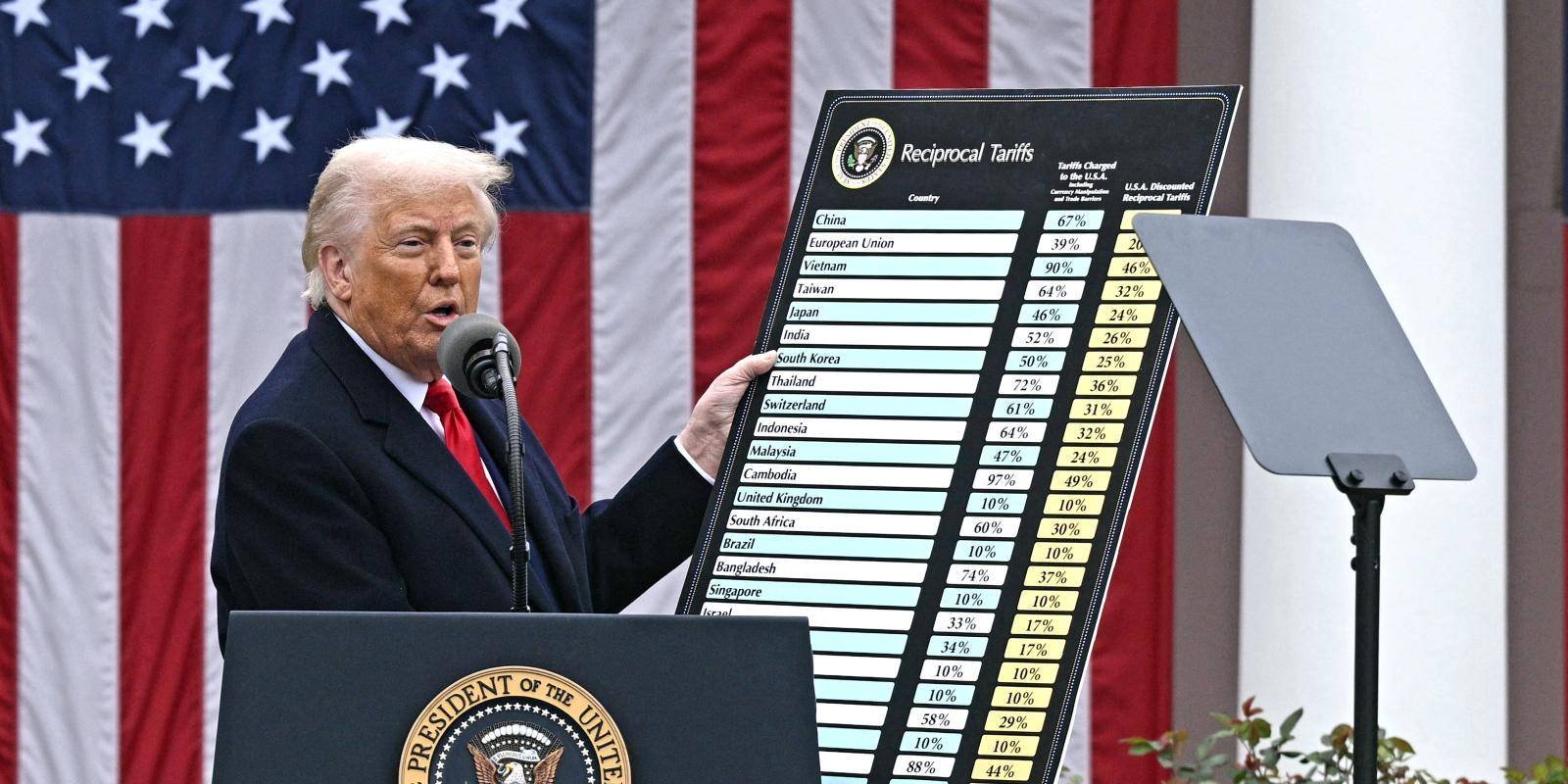
    The recent Supreme Court ruling invalidating President Trump’s broad import tariffs marks a turning point in U.S. trade policy. By declaring these tariffs unconstitutional under the International Emergency Economic Powers Act, the Court reaffirmed that sweeping trade measures require explicit Congressional authority. For businesses, this decision is more than a legal milestone; it presents both immediate relief and a framework for strategic foresight.

    Firms that previously faced inflated costs from tariffs can anticipate lower input prices, particularly in sectors dependent on imported raw materials such as manufacturing, construction, and electronics. Businesses awaiting refunds will need to manage cash flow carefully, as reimbursement processes may be slow and uneven. Smaller firms, in particular, must plan liquidity contingencies to bridge the gap until refunds are processed.

    Beyond immediate cost relief, the ruling highlights the importance of monitoring policy uncertainty. While these tariffs are struck down, the administration may explore alternative statutory mechanisms to reintroduce import duties. Businesses must therefore adopt dynamic risk assessment, modeling potential policy shifts and building flexibility into procurement, pricing, and inventory strategies.

    The broader economic lesson is clear: tariffs rarely achieve intended objectives without substantial cost to domestic businesses and consumers. In past years, U.S. firms absorbed most of the financial burden, either through higher input costs or price adjustments for consumers. Companies that anticipate shifts in trade policy can gain competitive advantage by diversifying supply chains, identifying alternative sourcing, and optimizing operational efficiency before competitors react.

    Strategically, the ruling offers a window for businesses to recalibrate. Firms can re-evaluate contracts, renegotiate supplier terms, and plan investments with a clearer expectation of costs. Importers can consider long-term agreements while monitoring potential new tariff routes. The key takeaway is that foresight and preparedness in the face of regulatory unpredictability is critical; organizations that proactively model scenarios are better positioned to maintain margins, respond to market shifts, and seize opportunities arising from competitors’ hesitation.

    In conclusion, while the Supreme Court decision mitigates immediate tariff pressures, it also underscores that trade policy remains volatile. Businesses that understand both the direct financial impact and the broader policy landscape can leverage this clarity to strengthen operations, reduce risk, and maintain strategic agility. Those who integrate foresight into planning will turn uncertainty into opportunity, navigating a complex trade environment more effectively than reactive competitors.


  • Japan, Iran and the Yuan: A New Threat to Dollar Dominance?

    Japan, Iran and the Yuan: A New Threat to Dollar Dominance?

    1 April 2026

    The U.S. dollar remains strong in the near term, supported by global uncertainty and its role as a safe-haven asset. However, recent developments involving Japan, Iran, and the Chinese yuan have introduced a new layer of uncertainty that could shape the future of global currency dynamics.

    At the center of attention is Iran’s reported push to explore oil transactions denominated in yuan, particularly in the context of heightened geopolitical tensions and disruptions around the Strait of Hormuz. As one of the world’s most critical energy chokepoints, any shift in how oil is traded through this region carries significant implications, not just for energy markets but for the global financial system.

    Japan’s position adds further complexity. As a major importer of Middle Eastern oil and a key ally of the United States, Japan is highly sensitive to supply disruptions. While there is no confirmed agreement that Japan has shifted to yuan-based oil payments with Iran, discussions surrounding alternative settlement methods have been enough to capture market attention.

    For investors, the concern is not whether such a deal has already been finalized. Rather, it is the possibility that major economies could begin considering alternatives to the U.S. dollar under geopolitical pressure. Even limited adoption of yuan-based transactions in energy trade could signal a gradual shift in global market behavior.

    Iran’s strategy reflects a broader trend often described as de-dollarization. By promoting the use of yuan in oil transactions, Tehran is attempting to reduce reliance on the U.S. dollar while aligning more closely with China’s growing economic influence. This is not entirely new, as China has already engaged in non-dollar energy trade with certain partners. However, linking currency preferences to critical shipping routes introduces a more strategic dimension.

    Despite these developments, the dominance of the U.S. dollar remains intact. During periods of crisis, global capital continues to flow into dollar-denominated assets, reinforcing its position. This creates a dual dynamic where the dollar strengthens in the short term, even as long-term structural questions begin to emerge.

    The key issue lies in perception. Markets are forward-looking, and even early-stage discussions about alternative systems can influence sentiment. The idea that oil trade, historically anchored in dollars, could diversify into other currencies challenges a fundamental pillar of the global financial system.

    In conclusion, while there is no confirmed shift by Japan toward yuan-based oil transactions with Iran, the narrative itself is significant. It reflects a changing geopolitical environment where currency, energy, and strategy are increasingly interconnected.

    The dollar remains dominant today. But the growing discussion around alternatives suggests that its long-term trajectory may be entering a new phase of uncertainty.

  • Quantum Computing: The Next Digital Breakthrough or a Global Power Race

    Quantum Computing: The Next Digital Breakthrough or a Global Power Race

    2 April 2026

    Recent warnings from tech giants such as Google have reignited global concerns over quantum computing, particularly the concept of “Q-Day”, the moment when current encryption systems could be completely broken. What was once theoretical is now increasingly seen as an approaching reality.

    Origins and Key Players

    the foundation of quantum computing dates back to the 1980s, pioneered by physicists like Ricard Feynman and David Deutsch. They proposed that the principles of quantum mechanics could be used to process information far beyond the limits of classical computers.

    today, quantum development is driven not only by academia but also by major corporations such as IBM and Google, alongside government-backed initiatives. This signals that quantum computing is no longer just a scientific pursuit, it is a strategic asset in global competition.

    Global Leaders in Quantum Technology

    The race for quantum dominance is currently led by few key nations:

    1. United States – Home to leading firms and research labs, driving innovation through private sector investment

    2. China – heavily state-funded, focusing on quantum communication and national security

    3. European Union – investing billion into coordinated research programs

    Japan – advancing quantum computer as a strategic asset, not just a technology tool

    Can Developing Countries Catch Up?

    for developing nations, entering the quantum space is challenging but not impossible.

    barriers include:

    1. extremely high research and infrastructure cost

    2. shortage of specialized talent

    3. dependence on advance semiconductor supply chains.

    However, opportunity still exist:

    1. collaboration with global tech firms

    2. access to cloud-based quantum platforms

    3. investment in niche areas like quantum software and cybersecurity

    Who Can Access Quantum Computer?

    As quantum computing advances, one critical question emerges: who actually has access to this powerful technology?

    Limited Access But Not Completely Closed

    Contrary to popular belief, quantum computers are not fully open to the public, but they are also not entirely restricted.

    Today, access generally falls into three main groups:

    Big Tech & Research Institutions
    Companies like IBM and Google operate some of the most advanced quantum systems. These are primarily used for:

    internal research

    high-level experimentation

    strategic development

    Cloud-Based Access (Controlled Public Use)
    Interestingly, limited access is already available through cloud platforms such as IBM Quantum Experience.

    This means:

    1. students, researchers, and developers can experiment with quantum computing online

    2. however, access is restricted in power and scale

    Governments & Strategic Programs
    National governments have deeper and more classified access, especially for:

    1. cybersecurity

    2. military applications

    3. intelligence operations

    The Reality: Controlled, Strategic, and Unequal

    Quantum computing today exists in a semi-open ecosystem:

    1. Public – limited, experimental access

    2. Companies – controlled, advanced access

    3. Governments – strategic, high-level access

    This creates a technology gap between:

    1. developed vs developing nations

    2. large corporations vs small players

    Advantages: Unprecedented Computing Power

    Quantum computers have the potential to solve complex problems at speeds unimaginable with current technology. this open transformative opportunities in:

    1. Healthcare (faster drug discovery)

    2. Finance (advance risk modeling)

    3. Artificial Intelligence and Logistic optimization

    For the IT industry, this represents a major leap forwarding efficiency and innovation.

    Disadvantages: A Threat to Digital Security

    Despite its promise, quantum computing poses a serious threat to existing cybersecurity systems. Current encryption methods, which protect everything from banking system to personal data, could be rendered obsolete.

    The consequences could include:

    1. Exposure of sensitive financial data

    2. Compromised government systems

    3. Loss of trust in digital platforms, including cryptocurrencies

    More concerning is the “store now, decrypt later” strategy, where data stolen today can be decrypted once quantum technology becomes powerful enough.

    Winners and Losers

    Winners:

    1. technologically advanced nations

    2. big tech companies

    3. next-generation cybersecurity firms

    Losers:

    1. institutions relying on outdated systems

    2. smaller economies with limited resources

    3. unprepared digital ecosystems

    Opportunities in Disruption

    Despite the risks, quantum opens doors for:

    1. post-quantum cybersecurity solutions

    2. new tech investments

    3. innovation in digital infrastructure

    Conclusion

    Quantum computing is no longer just a scientific breakthrough, it is a global power race. As nations compete for dominance, the technology is set to reshape not only the IT landscape but also the balance of digital power worldwide.

    In this race, participation may define survival, but dominance could define control.

  • Stalled Diplomacy, Rising Pressure: Global Powers Push to Mediate as US–Iran War Intensifies

    Stalled Diplomacy, Rising Pressure: Global Powers Push to Mediate as US–Iran War Intensifies

    1 April 2026

    The United States and Iran remain locked in escalating conflict as diplomatic efforts between the two sides appear to have collapsed, leaving the war to intensify with no clear resolution in sight. Despite earlier indirect contacts, both Washington and Tehran have confirmed that no formal negotiations are currently underway, deepening concerns of a prolonged regional crisis.

    U.S. Secretary of State Marco Rubio struck a cautiously optimistic tone, stating, “We can see a potential finish line, but it will require the right conditions and serious commitments from Iran.” However, he acknowledged that communication channels remain fragile and limited, with no structured peace talks taking place.

    From Tehran, Iranian Foreign Minister Hossein Amir-Abdollahian dismissed claims of ongoing negotiations, saying, “There are no direct talks with the United States. Messages may be exchanged, but Iran will not negotiate under pressure or aggression.” His remarks reflect Iran’s firm stance against entering dialogue while military operations continue.

    As the conflict drags on, other global powers are stepping in to fill the diplomatic vacuum. China has positioned itself as a key potential mediator, with Foreign Ministry spokesperson Wang Wenbin stating, “China supports all efforts that promote de-escalation and dialogue. A ceasefire is the urgent priority to avoid further instability.” Beijing, alongside Pakistan, has proposed a multi-point peace plan aimed at halting hostilities and reopening negotiations.

    The United Kingdom has also expressed readiness to assist in mediation. British Prime Minister Rishi Sunak urged restraint, saying, “The priority now must be de-escalation. The UK stands ready to support any credible diplomatic pathway that brings both sides back to the table.” His statement reflects growing concern among Western allies over the broader implications of the war.

    On the ground, the situation continues to deteriorate. U.S. forces have intensified strikes on Iranian-linked targets, while Tehran has responded with regional proxies and asymmetric tactics. The ongoing instability around key shipping routes, particularly the Strait of Hormuz, has raised alarm over global energy security and trade disruptions.

    Analysts warn that without direct engagement between Washington and Tehran, mediation efforts by third parties may struggle to achieve immediate results. Still, the involvement of major powers like China and the UK signals mounting international pressure to end the conflict before it spirals further.

    With casualties rising and economic shockwaves spreading, the absence of talks underscores a dangerous reality: while the war continues on the battlefield, diplomacy is now being fought and tested on a global stage.

  • Trump Signals Endgame in Iran War While Threatening NATO Exit and Allies

    Trump Signals Endgame in Iran War While Threatening NATO Exit and Allies

    1 April 2026

    Former U.S. President Donald Trump delivered a series of explosive statements today, suggesting that the ongoing conflict involving Iran could soon reach its conclusion, while simultaneously escalating tensions with traditional Western allies and the NATO alliance.

    Speaking to reporters, Trump claimed that the war effort had already achieved its primary objectives, describing Iran as “essentially decimated.” He added that the United States could wrap up its military involvement within “two to three weeks,” even without a formal peace agreement. The remarks signal what analysts believe could be a shift toward a rapid disengagement strategy, potentially leaving regional security responsibilities to other global powers.

    In a move that has alarmed European leaders, Trump issued a blunt warning to allies, particularly the United Kingdom and members of the European Union. “Go get your own oil,” he said, accusing them of failing to support Washington’s military campaign. He further warned that the United States “won’t be there to help anymore,” raising concerns about a long-term fracture in transatlantic relations.

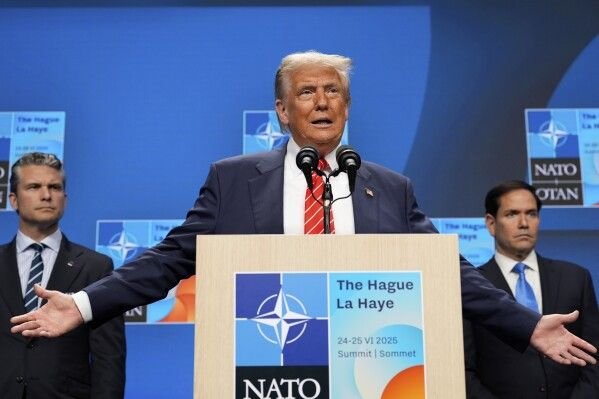
    The rhetoric did not stop there. Trump also revealed that his administration is “strongly considering” withdrawing from NATO, the decades-old military alliance widely seen as a cornerstone of Western security. Labeling the alliance a “paper tiger,” Trump questioned its effectiveness and burden-sharing structure, a criticism he has repeatedly voiced in the past. A U.S. exit from NATO would mark a historic geopolitical shift, potentially reshaping global defense dynamics.

    On the domestic front, Trump signed a controversial executive order targeting U.S. election procedures. The order seeks to limit mail-in voting and establish a centralized national voter database. Critics, including several civil rights groups, argue that the measures could suppress voter participation and face immediate legal challenges. Supporters, however, claim the changes are necessary to ensure election integrity.

    Political observers note that Trump’s latest statements reflect a broader “America First” posture, combining military assertiveness with a reduced commitment to international alliances. While some view the potential end of the Iran conflict as a positive development, others warn that a sudden withdrawal paired with strained alliances could create a power vacuum in an already volatile region.

    As global leaders react cautiously, the coming weeks are expected to be critical in determining whether Trump’s remarks translate into concrete policy actions or remain part of his characteristic political messaging.

  • U.S. Dollar Outlook 2026: Strength Now, Uncertainty Ahead

    U.S. Dollar Outlook 2026: Strength Now, Uncertainty Ahead

    1 April 2026

    The U.S. dollar remains firmly supported in the current phase of the global cycle, underpinned by elevated interest rates, resilient economic conditions, and tightening global liquidity.

    However, while near-term dynamics continue to favor the dollar, the medium- to long-term outlook is becoming increasingly complex. As the global monetary cycle evolves and policy eventually shifts, the factors supporting dollar strength today may begin to lose momentum.

    This creates a market environment defined by short-term strength but rising longer-term volatility.

    Macro Backdrop: A Market Repricing

    The current strength of the dollar is rooted in a broader repricing of macroeconomic expectations.

    At the start of the year, markets were positioned for a relatively quick transition toward monetary easing. That assumption has since been challenged. Inflation remains more persistent than expected, particularly due to energy costs and structural supply constraints.

    As a result, policymakers have maintained a restrictive stance, reinforcing the “higher-for-longer” rate environment. This shift has had a direct impact on capital allocation, with investors increasingly prioritizing yield over defensive positioning.

    Yield Advantage and Capital Flows

    The dollar’s strength is closely tied to the level of real yields in the United States.

    With nominal rates still elevated and inflation stabilizing only gradually, real yields remain positive and attractive. This has strengthened the case for holding dollar-denominated assets, particularly sovereign bonds and short-duration instruments.

    Global capital is responding accordingly. Funds are being reallocated toward U.S. markets, not as a short-term trade, but as part of a broader repositioning toward assets offering stable, risk-adjusted returns.

    This flow dynamic continues to provide structural support for the dollar in the near term.

    Currency Market Signals

    Developments across major currency pairs reinforce this narrative.

    European currencies, including the euro and the British pound, have struggled to sustain upward momentum against the dollar. This reflects not only growth differentials, but also a divergence in policy expectations, where the scope for aggressive tightening outside the United States appears more limited.

    The Japanese yen has remained under pressure, largely due to persistent yield differentials. As long as monetary policy in Japan remains accommodative, capital is likely to continue favoring higher-yielding dollar assets.

    In emerging markets, the impact is more pronounced. Currencies across Asia and other developing regions are facing pressure from capital outflows and tighter external financing conditions. The strength of the dollar, in this context, acts as a tightening mechanism for the global financial system.

    Taken together, these cross-currency movements confirm that dollar strength is broad-based and supported by underlying macro forces.

    The Dollar in a Tightening Global System

    The role of the dollar extends beyond currency markets. It remains central to global trade, liquidity, and financial stability.

    A large share of global transactions is conducted in dollars, and a significant portion of international debt is denominated in USD. When financial conditions tighten, demand for dollar liquidity increases almost automatically.

    This dynamic creates a reinforcing cycle. As the dollar strengthens, global liquidity conditions tighten further, which in turn sustains demand for the dollar itself.

    Market Implications

    A stronger dollar has wide implications across asset classes.

    In commodities, higher dollar strength raises the effective cost for non-dollar buyers, which can weigh on demand. This is particularly relevant for assets such as gold, where rising yields and a stronger dollar reduce its relative attractiveness.

    In emerging markets, currency depreciation and higher debt servicing costs can constrain economic growth and reduce investment inflows.

    In equity markets, capital tends to favor U.S. assets, reflecting both yield advantages and relative economic stability.

    Outlook: Strength in the Near Term, Volatility Ahead

    In the near term, the U.S. dollar is likely to remain supported. Elevated yields, delayed monetary easing, and ongoing global uncertainty continue to reinforce demand for dollar-denominated assets.

    However, beyond this immediate horizon, the outlook becomes less straightforward.

    As inflation gradually moderates and economic conditions evolve, central banks—particularly in the United States—will eventually face pressure to shift toward easing. When this transition begins, the yield advantage that has supported the dollar may start to narrow.

    At the same time, any signs of slowing U.S. growth or stabilization in other major economies could alter capital flow dynamics.

    Taken together, these factors suggest that while the dollar remains firm in the short term, its trajectory over the medium to long term is likely to become more volatile, with increasing sensitivity to policy shifts and global growth conditions.

    Conclusion

    The U.S. dollar is currently supported by a strong combination of macroeconomic factors, particularly elevated yields and global capital flows. These conditions are likely to sustain its strength in the near term.

    However, this strength should not be viewed as permanent. As the monetary cycle evolves, the structural advantages supporting the dollar may begin to shift.

    For now, the dollar remains in a position of strength. But looking ahead, the market is likely to transition from a phase of clear direction to one defined by greater uncertainty and volatility.

  • Gold Faces Structural Headwinds as Macro Regime Shifts Point to Further Downside

    Gold Faces Structural Headwinds as Macro Regime Shifts Point to Further Downside

    31 March 2026

    Gold’s recent decline is not an isolated correction but a reflection of a broader macroeconomic regime shift. After an extended period of accommodative monetary policy and inflation hedging, the global financial system is transitioning into a higher-for-longer interest rate environment, fundamentally altering the investment case for non-yielding assets.

    In this context, gold is increasingly vulnerable. The convergence of restrictive monetary policy, persistent dollar strength, and capital reallocation toward yield bearing instruments suggests that downside risks remain dominant in the near term.

    Macro Regime Shift: The Core Thesis

    The primary driver behind gold’s weakening trajectory is the re-pricing of global liquidity. Markets have decisively moved away from the assumption of imminent monetary easing.

    Instead, three structural realities are now being priced in:

    Interest rates are likely to remain elevated for longer than previously anticipated

    Inflation, while moderating, remains structurally sticky due to energy and supply-side factors

    Central banks are prioritizing credibility over growth, delaying policy accommodation

    This shift has materially changed capital allocation behavior. Gold, which thrived under negative real yields, is now operating in an environment where real yields are positive and rising – it historically adverse condition for the asset class.

    Yield Competition and Capital Rotation

    At its core, gold’s weakness is a function of opportunity cost.

    As sovereign bond yields climb, institutional capital is being systematically reallocated away from commodities and into fixed income. This is not speculative positioning it is strategic rebalancing at scale.

    Large asset managers, pension funds, and sovereign portfolios are increasingly favoring:

    U.S. Treasuries

    Investment-grade debt

    Short-duration cash instruments

    These assets now offer real, risk-adjusted returns, eroding gold’s relative attractiveness.

    The result is a persistent outflow dynamic that continues to suppress price recovery.

    Dollar Dominance and Global Liquidity Constraints

    Compounding the pressure is the structural strength of the U.S. dollar.

    Dollar appreciation is not merely a currency story it reflects tightening global liquidity conditions. As capital flows into the U.S. in search of yield and safety, emerging markets face currency depreciation and reduced purchasing power.

    For gold, this creates a dual constraint:

    Higher effective pricing for non-dollar buyers

    Weaker demand from traditionally strong consumption regions

    This dynamic reinforces the bearish bias, particularly in the absence of a catalyst for dollar weakness.

    The Geopolitical Mispricing

    Conventional wisdom suggests that geopolitical instability should support gold. However, the current cycle is demonstrating a critical divergence.

    Rising geopolitical tensions particularly in energy markets – are feeding directly into inflationary pressures. Rather than triggering safe-haven inflows into gold, this has forced central banks to maintain restrictive policy stances.

    In effect, geopolitics is acting as a negative second-order driver for gold:

    Energy shocks – Inflation persistence

    Inflation persistence – Delayed rate cuts

    Delayed rate cuts – Higher real yields

    This chain reaction undermines gold’s traditional role as a crisis hedge.

    Technical Structure: Weakness Beneath the Surface

    Price action further reinforces the macro narrative.

    Gold has broken below key structural supports, with momentum indicators pointing toward continued downside extension rather than stabilization.

    The absence of strong buying interest at critical levels suggests that:

    Institutional demand is not yet returning

    Market participants are positioning for further weakness

    Downside targets remain open, with potential for a deeper retracement phase

    This is not capitulation but it is a controlled unwinding of bullish positioning.

    Outlook: Tactical Bearish, Structurally Conditional

    In the near term, the outlook for gold remains decisively bearish. The macro environment does not support a sustained recovery, and any short-term rallies are likely to be sold into rather than followed through.

    However, it is critical to distinguish between cyclical weakness and structural invalidation.

    Gold’s long-term thesis anchored in monetary instability, sovereign risk, and reserve diversification remains intact. But timing is crucial.

    A meaningful reversal would require:

    A clear pivot toward monetary easing

    Sustained decline in real yields

    Structural weakening of the U.S. dollar

    Until such conditions emerge, gold is likely to remain under pressure.

    Conclusion

    Gold is no longer being driven by fear but by the cost of capital.

    In a world where liquidity is constrained, yields are elevated, and policy remains restrictive, the asset’s limitations are being fully exposed. The current decline should therefore be understood not as a temporary dislocation, but as a rational repricing within a tighter financial regime.

    For investors, the implication is clear:
    This is not yet a market to chase but one to observe, reassess, and approach with discipline

  • Is Cuba Next? Rising U.S. Pressure Signals a New Flashpoint in the Americas

    Is Cuba Next? Rising U.S. Pressure Signals a New Flashpoint in the Americas

    31 March 2026

    As global tensions intensify, attention is increasingly turning toward Cuba, where a deepening economic crisis and escalating U.S. pressure have raised questions about whether the island could become Washington’s next major geopolitical focus.

    Cuba is currently facing one of its worst crises in decades, driven largely by a U.S.-led effort to restrict its access to fuel. The resulting shortages have caused widespread blackouts, disrupted public services, and strained daily life across the island.

    At the center of this pressure campaign is U.S. President Donald Trump, who has taken an unusually aggressive stance. Earlier this month, Trump declared that Cuba’s government would “fall pretty soon,” while also suggesting that the United States could take a more direct role in the island’s future.

    In one striking remark, Trump said he could have “the honour of taking Cuba,” adding that he could “do anything” he wanted with it comments that sparked alarm both domestically and internationally.

    Despite the hardline rhetoric, recent developments suggest a more complex approach. The Trump administration recently allowed a sanctioned Russian oil tanker to dock in Cuba, offering temporary relief to the island’s energy crisis. Trump defended the move, saying he had “no problem” with such deliveries and that decisions would be made on a case-by-case basis.

    White House officials have emphasized that this does not signal a policy shift. Press Secretary Karoline Leavitt stated the administration remains committed to its broader strategy, insisting the decision was made for humanitarian reasons while maintaining pressure on the Cuban government.

    Meanwhile, senior U.S. figures, including Secretary of State Marco Rubio, have openly supported political change in Cuba, reinforcing the administration’s long-term goal of reshaping the island’s leadership.

    For Cuban President Miguel Díaz-Canel, the situation amounts to economic warfare. He has rejected U.S. demands and insisted that Cuba remains “a free, independent, and sovereign nation.”

    Analysts say the unfolding situation reflects a broader U.S. strategy: applying maximum economic pressure to force political concessions without direct military intervention. While Cuba may not be “next” in terms of war, it is clearly emerging as a central battleground in Washington’s geopolitical agenda one defined not by bombs, but by blockade, diplomacy, and the struggle for influence.

  • Justice or Double Standard? Israel’s Death Penalty Law Raises Questions of Hypocrisy

    Justice or Double Standard? Israel’s Death Penalty Law Raises Questions of Hypocrisy

    31 March 2026

    Israel’s latest move to introduce the death penalty for those convicted of deadly attacks is being framed by its supporters as a necessary act of justice. But beyond the rhetoric of security lies a far more troubling question: does this law expose a deep contradiction at the heart of Israel’s legal and moral claims.

    Passed by the Knesset on 30 March 2026, the legislation marks a sharp break from decades of restraint. Israel has not carried out an

    execution since 1962, when Adolf Eichmann was put to death for his role in the Holocaust. That singular moment was widely seen as exceptional reserved for crimes of unparalleled historical magnitude. Today, however, the threshold appears to be shifting.

    The core of the controversy lies not just in the reintroduction of capital punishment, but in how it is likely to be applied. Palestinians in the occupied territories are tried under military courts, while Israeli citizens particularly Jewish settlers are subject to civilian courts. In practice, this creates two parallel systems of justice operating on the same land. A law as severe and irreversible as the death penalty, when placed into such a framework, raises unavoidable concerns about equality before the law.

    Supporters argue that the measure is essential to deter attacks and protect lives. Yet deterrence is a contested claim, and many legal experts argue there is little evidence that capital punishment prevents violence more effectively than other penalties. What remains clear, however, is the perception both locally and internationally that this law risks being applied unevenly.

    That perception matters. Israel has long positioned itself as a democracy grounded in the rule of law. But critics now argue that introducing a punishment of this magnitude, while maintaining separate legal systems for different populations, undermines that claim. If justice is not applied equally, can it still be called justice

    The reaction from the United Nations and human rights groups has been swift, warning that the law could violate international norms, particularly if implemented in a discriminatory manner. These concerns are not abstract they strike at the credibility of Israel’s legal institutions on the global stage.

    At its core, this is not just a legal debate, but a moral one. The reintroduction of the death penalty in any context is contentious. But when it appears to target one group more than another, it invites accusations not only of injustice, but of hypocrisy.

    Whether Israel sees this law as a tool of security or justice, the world is likely to judge it by a different standard: consistency. And in that regard, the questions raised may prove far more difficult to answer than any court ruling.

  • Australia Faces Fuel Price Surge and Growing Shortages Amid Global Oil Disruptions

    Australia Faces Fuel Price Surge and Growing Shortages Amid Global Oil Disruptions

    30 March 2026

    Australia is grappling with a sharp rise in fuel prices and emerging shortages, as global oil supply disruptions linked largely to tensions in the Middle East begin to hit the country’s heavily import-dependent energy system.

    Petrol prices across the country have surged to between AUD $2.40 and $3.10 per litre, with diesel climbing even higher to above $3.00 per litre in some regions. The spike reflects tightening global supply chains and reduced output from key refining hubs in Asia, which supply the majority of Australia’s fuel.

    Energy analyst Dr. Melissa Grant said the situation highlights a long-standing vulnerability. “Australia imports close to 90% of its refined fuel. When global supply is disrupted, we feel it almost immediately at the pump,” she said. “What we’re seeing now is not just a price shock, but a supply stress.”

    Early signs of shortages are already appearing. In New South Wales alone, around 165 petrol stations have reportedly run out of diesel, while nearly 300 outlets are missing at least one type of fuel. Nationwide, estimates suggest that between 5% and 10% of Australia’s roughly 7,000 fuel stations are experiencing some form of shortage.

    “This is not yet a nationwide crisis, but it is a warning sign,” said Transport Minister Catherine King. “We are closely monitoring supply levels and working with industry to ensure fuel continues reaching critical sectors.”

    The federal government has begun releasing a portion of its strategic fuel reserves and is exploring emergency import arrangements to stabilise supply. However, experts warn that Australia’s relatively low fuel stockpile estimated at just over a month’s supply leaves little room for prolonged disruption.

    For businesses and consumers, the impact is already being felt. Logistics companies report rising operating costs, while households are facing increased expenses for transport and goods.

    “If prices stay this high, inflation will rise again,” said economist Peter Lang. “Fuel feeds into everything from food delivery to manufacturing so the broader economic effects could be significant.”

    While authorities insist there is no immediate need for rationing, analysts caution that continued instability in global oil markets could worsen the situation in the coming weeks, especially if supply routes remain constrained.

    As Australia navigates this uncertain period, the crisis is reigniting debate over energy security and the need to strengthen domestic refining and fuel reserves to withstand future shocks.