2 April 2026
Recent warnings from tech giants such as Google have reignited global concerns over quantum computing, particularly the concept of “Q-Day”, the moment when current encryption systems could be completely broken. What was once theoretical is now increasingly seen as an approaching reality.
Origins and Key Players
the foundation of quantum computing dates back to the 1980s, pioneered by physicists like Ricard Feynman and David Deutsch. They proposed that the principles of quantum mechanics could be used to process information far beyond the limits of classical computers.
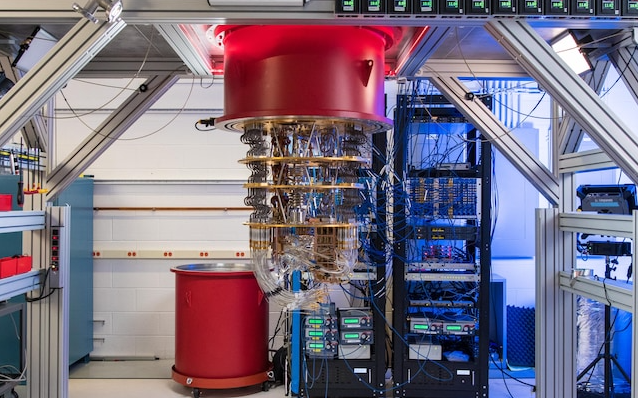
today, quantum development is driven not only by academia but also by major corporations such as IBM and Google, alongside government-backed initiatives. This signals that quantum computing is no longer just a scientific pursuit, it is a strategic asset in global competition.
Global Leaders in Quantum Technology
The race for quantum dominance is currently led by few key nations:
1. United States – Home to leading firms and research labs, driving innovation through private sector investment
2. China – heavily state-funded, focusing on quantum communication and national security
3. European Union – investing billion into coordinated research programs
Japan – advancing quantum computer as a strategic asset, not just a technology tool
Can Developing Countries Catch Up?
for developing nations, entering the quantum space is challenging but not impossible.
barriers include:
1. extremely high research and infrastructure cost
2. shortage of specialized talent
3. dependence on advance semiconductor supply chains.
However, opportunity still exist:
1. collaboration with global tech firms
2. access to cloud-based quantum platforms
3. investment in niche areas like quantum software and cybersecurity
Who Can Access Quantum Computer?
As quantum computing advances, one critical question emerges: who actually has access to this powerful technology?
Limited Access But Not Completely Closed
Contrary to popular belief, quantum computers are not fully open to the public, but they are also not entirely restricted.
Today, access generally falls into three main groups:
Big Tech & Research Institutions
Companies like IBM and Google operate some of the most advanced quantum systems. These are primarily used for:
internal research
high-level experimentation
strategic development
Cloud-Based Access (Controlled Public Use)
Interestingly, limited access is already available through cloud platforms such as IBM Quantum Experience.
This means:
1. students, researchers, and developers can experiment with quantum computing online
2. however, access is restricted in power and scale
Governments & Strategic Programs
National governments have deeper and more classified access, especially for:
1. cybersecurity
2. military applications
3. intelligence operations
The Reality: Controlled, Strategic, and Unequal
Quantum computing today exists in a semi-open ecosystem:
1. Public – limited, experimental access
2. Companies – controlled, advanced access
3. Governments – strategic, high-level access
This creates a technology gap between:
1. developed vs developing nations
2. large corporations vs small players
Advantages: Unprecedented Computing Power
Quantum computers have the potential to solve complex problems at speeds unimaginable with current technology. this open transformative opportunities in:
1. Healthcare (faster drug discovery)
2. Finance (advance risk modeling)
3. Artificial Intelligence and Logistic optimization
For the IT industry, this represents a major leap forwarding efficiency and innovation.
Disadvantages: A Threat to Digital Security
Despite its promise, quantum computing poses a serious threat to existing cybersecurity systems. Current encryption methods, which protect everything from banking system to personal data, could be rendered obsolete.
The consequences could include:
1. Exposure of sensitive financial data
2. Compromised government systems
3. Loss of trust in digital platforms, including cryptocurrencies
More concerning is the “store now, decrypt later” strategy, where data stolen today can be decrypted once quantum technology becomes powerful enough.
Winners and Losers
Winners:
1. technologically advanced nations
2. big tech companies
3. next-generation cybersecurity firms
Losers:
1. institutions relying on outdated systems
2. smaller economies with limited resources
3. unprepared digital ecosystems
Opportunities in Disruption
Despite the risks, quantum opens doors for:
1. post-quantum cybersecurity solutions
2. new tech investments
3. innovation in digital infrastructure
Conclusion
Quantum computing is no longer just a scientific breakthrough, it is a global power race. As nations compete for dominance, the technology is set to reshape not only the IT landscape but also the balance of digital power worldwide.
In this race, participation may define survival, but dominance could define control.
Leave a Reply