
Category: digital

  • Human Ingenuity in the Age of AI: Why We Still Matter

    Human Ingenuity in the Age of AI: Why We Still Matter

    6 April 2026

    The rise of artificial intelligence has transformed the way the world works. From drafting reports to automating repetitive tasks, machine learning models now handle a wide range of functions once thought to require human labor. But rather than heralding the end of human relevance, this transformation underscores a deeper truth: it is precisely our human imperfections, our mistakes, emotions, intuition and creativity that keep us indispensable.

    Recent reporting shows that workers at all levels are feeling anxiety about the impact of AI on their job security. Many fear that automation and digital employees will replace routine roles entirely, especially in jobs with predictable tasks. This fear is compounded by layoffs linked to increased AI adoption, prompting concerns over long-term employment stability.

    Experts caution against the narrative that AI will simply wipe out human labor. Studies suggest that while AI can automate many text-based and repeatable tasks, this transformation is slow and uneven, offering workers time to adjust and demonstrate their unique value. Significant human oversight is still required.

    AI Augments, But Doesn’t Replace Human Judgment

    Technology leaders argue that AI is reshaping task execution, not eliminating the core purpose of professions. Machines take on repetitive work, but humans still bring context, judgment and decision-making to the table, qualities that are difficult for AI to replicate.

    This distinction between tasks and deep human purpose forms the heart of the modern debate. AI excels in predictable environments where logic and data dominate. It is precise, tireless and efficient. Yet the same systems lack something fundamental, emotional intelligence, moral reasoning, curiosity, and lived experience.

    Research highlights the skills that machines cannot replicate, even as AI becomes more sophisticated. Emotional judgment, taste, moral courage, storytelling, trust-building, and question-engineering remain deeply human domains. AI might generate options in mass, but humans decide which options matter.

    Mistakes: The Hidden Source of Human Creativity

    An emerging narrative among thinkers and journalists is that mistakes are not merely errors, they are creative catalysts. Where AI relies on patterns and trained data, human error often leads to discovery, innovation and breakthroughs that machines cannot anticipate. AI may generate solutions based on existing knowledge, but it does not invent new problems or contexts, nor does it possess the lived experiences from which authentic artistry emerges.

    Human-AI Collaboration: The Future, Not Competition

    Rather than viewing AI as an existential threat, many experts argue that AI’s greatest power is in amplifying human potential. By handling routine tasks and data-driven functions, AI allows humans to focus on areas where they excel, strategic thinking, ethical judgment, complex problem-solving and cultural understanding.

    This does not mean there won’t be disruption. There will be job churn, shifts in required skills, and transitions in how work is structured. Even massive layoffs tied to automation have shown one truth: humans who understand how to work with AI rather than fight it are far more likely to thrive.

    Practical Ways Humans Can Stay Relevant

    For workers and communities grappling with the rise of AI, the most effective strategy is not resistance but adaptation. Skills rooted in human nuance, emotional intelligence, cultural fluency, ethical leadership, and creative problem-solving are becoming increasingly valuable. This does not require rejecting technology; it means leveraging AI as a tool while retaining the uniquely human qualities AI cannot imitate.

    For example:

    1. Leaders use empathy to nurture teams and make difficult decisions that involve human impact

    2. Storytellers craft narratives grounded in lived experience, not data patterns

    3. Innovators ask questions that break assumptions rather than simply optimize existing processes

    These are the domains where human insight continues to outshine automation.

    Conclusion: Humans Remain Independent and Creative

    AI is a powerful tool, but it does not define our value or capabilities. Humans are capable of thinking independently, solving problems creatively, and making decisions based on judgment and experience. Mistakes, exploration, and intuition are what fuel innovation, and these remain uniquely human.

    While AI can assist in tasks that are repetitive or data-heavy, it is our independence, adaptability, and creativity that ensure we remain relevant. Success does not come from relying solely on machines, but from understanding that human ingenuity can thrive on its own while leveraging AI when useful. Humans are not just surviving alongside AI; they are leading, creating, and shaping the future with or without it.

  • Vietnam Embraces China’s Cross-Border QR Payment Network

    Vietnam Embraces China’s Cross-Border QR Payment Network

    4 April 2026

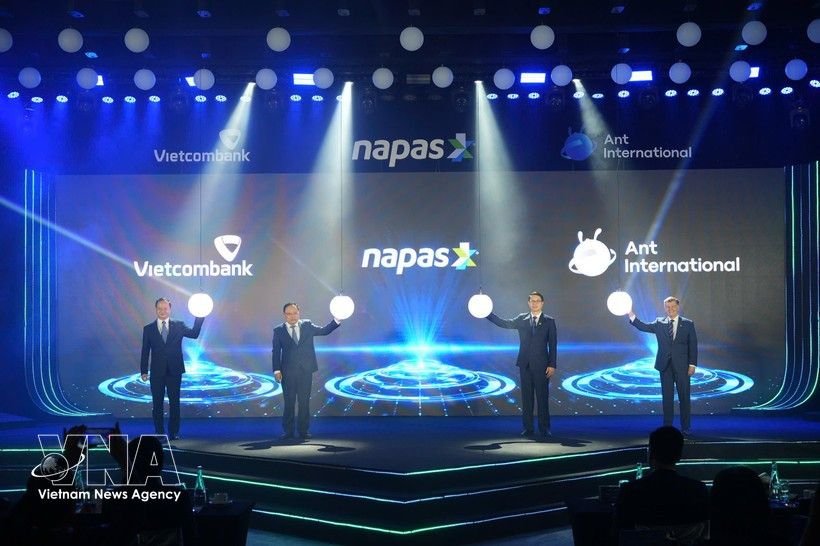
    Vietnam has taken a major step in expanding its digital payment ecosystem by joining China’s yuan QR payment network. Through a partnership between NAPAS, Vietcombank, and Ant International, Chinese tourists can now pay directly with Alipay at a wide range of merchants across Vietnam, from restaurants and shopping centers to hotels and tourist attractions. Payments are processed in yuan and automatically converted to Vietnamese dong, making transactions faster, more convenient, and secure.

    This initiative represents more than just payment convenience. It signals Vietnam’s commitment to attracting Chinese visitors and investors while accelerating the country’s digital economy. With over one billion active users in China’s payment ecosystem, the integration provides a seamless experience for travelers who are already familiar with these platforms. It also strengthens Vietnam’s competitiveness in the service sector and creates opportunities for foreign investment in hospitality, retail, and e-commerce.

    Local businesses, especially micro, small, and medium enterprises, benefit significantly from this development. Merchants can now accept foreign payments without incurring costs for international card systems or managing currency exchange manually. The expansion encourages businesses to adopt financial technology faster, enhances operational efficiency, and integrates them more deeply into the regional digital economy.

    However, the move comes with challenges. Heavy reliance on China’s payment system exposes Vietnam to potential geopolitical and economic risks. Policy changes or trade tensions in China could impact transaction flows, while data security and user privacy remain critical concerns. It is essential for Vietnam to maintain control over the system and ensure compliance with domestic regulations to protect both businesses and consumers.

    Regionally, this step reflects a broader trend across Southeast Asia. Neighboring countries including Thailand, Laos, and Cambodia have begun linking their QR payment systems with China, creating a regional digital payment network. By joining this network, Vietnam simplifies transactions for tourists while positioning itself as a tech-forward, tourist-friendly country open to financial innovation.

    Vietnam’s participation in China’s yuan QR network demonstrates that digital payments are not just about convenience. They are tools for economic strategy and regional competitiveness. If implemented carefully, this initiative can bring long-term benefits to tourism, trade, and digital economic development while reinforcing Vietnam’s image as an innovative and investor-friendly hub in Southeast Asia.

  • Quantum Computing: The Next Digital Breakthrough or a Global Power Race

    Quantum Computing: The Next Digital Breakthrough or a Global Power Race

    2 April 2026

    Recent warnings from tech giants such as Google have reignited global concerns over quantum computing, particularly the concept of “Q-Day”, the moment when current encryption systems could be completely broken. What was once theoretical is now increasingly seen as an approaching reality.

    Origins and Key Players

    the foundation of quantum computing dates back to the 1980s, pioneered by physicists like Ricard Feynman and David Deutsch. They proposed that the principles of quantum mechanics could be used to process information far beyond the limits of classical computers.

    today, quantum development is driven not only by academia but also by major corporations such as IBM and Google, alongside government-backed initiatives. This signals that quantum computing is no longer just a scientific pursuit, it is a strategic asset in global competition.

    Global Leaders in Quantum Technology

    The race for quantum dominance is currently led by few key nations:

    1. United States – Home to leading firms and research labs, driving innovation through private sector investment

    2. China – heavily state-funded, focusing on quantum communication and national security

    3. European Union – investing billion into coordinated research programs

    Japan – advancing quantum computer as a strategic asset, not just a technology tool

    Can Developing Countries Catch Up?

    for developing nations, entering the quantum space is challenging but not impossible.

    barriers include:

    1. extremely high research and infrastructure cost

    2. shortage of specialized talent

    3. dependence on advance semiconductor supply chains.

    However, opportunity still exist:

    1. collaboration with global tech firms

    2. access to cloud-based quantum platforms

    3. investment in niche areas like quantum software and cybersecurity

    Who Can Access Quantum Computer?

    As quantum computing advances, one critical question emerges: who actually has access to this powerful technology?

    Limited Access But Not Completely Closed

    Contrary to popular belief, quantum computers are not fully open to the public, but they are also not entirely restricted.

    Today, access generally falls into three main groups:

    Big Tech & Research Institutions
    Companies like IBM and Google operate some of the most advanced quantum systems. These are primarily used for:

    internal research

    high-level experimentation

    strategic development

    Cloud-Based Access (Controlled Public Use)
    Interestingly, limited access is already available through cloud platforms such as IBM Quantum Experience.

    This means:

    1. students, researchers, and developers can experiment with quantum computing online

    2. however, access is restricted in power and scale

    Governments & Strategic Programs
    National governments have deeper and more classified access, especially for:

    1. cybersecurity

    2. military applications

    3. intelligence operations

    The Reality: Controlled, Strategic, and Unequal

    Quantum computing today exists in a semi-open ecosystem:

    1. Public – limited, experimental access

    2. Companies – controlled, advanced access

    3. Governments – strategic, high-level access

    This creates a technology gap between:

    1. developed vs developing nations

    2. large corporations vs small players

    Advantages: Unprecedented Computing Power

    Quantum computers have the potential to solve complex problems at speeds unimaginable with current technology. this open transformative opportunities in:

    1. Healthcare (faster drug discovery)

    2. Finance (advance risk modeling)

    3. Artificial Intelligence and Logistic optimization

    For the IT industry, this represents a major leap forwarding efficiency and innovation.

    Disadvantages: A Threat to Digital Security

    Despite its promise, quantum computing poses a serious threat to existing cybersecurity systems. Current encryption methods, which protect everything from banking system to personal data, could be rendered obsolete.

    The consequences could include:

    1. Exposure of sensitive financial data

    2. Compromised government systems

    3. Loss of trust in digital platforms, including cryptocurrencies

    More concerning is the “store now, decrypt later” strategy, where data stolen today can be decrypted once quantum technology becomes powerful enough.

    Winners and Losers

    Winners:

    1. technologically advanced nations

    2. big tech companies

    3. next-generation cybersecurity firms

    Losers:

    1. institutions relying on outdated systems

    2. smaller economies with limited resources

    3. unprepared digital ecosystems

    Opportunities in Disruption

    Despite the risks, quantum opens doors for:

    1. post-quantum cybersecurity solutions

    2. new tech investments

    3. innovation in digital infrastructure

    Conclusion

    Quantum computing is no longer just a scientific breakthrough, it is a global power race. As nations compete for dominance, the technology is set to reshape not only the IT landscape but also the balance of digital power worldwide.

    In this race, participation may define survival, but dominance could define control.