
18 April 2026
The relationship between quantum computing, the broader quantum economy, and quantum related equities represents a layered transformation that is still in its early but highly consequential phase. Understanding how these layers interact is essential for anyone evaluating long term opportunities, whether as an investor, entrepreneur, or small business operator.
At the foundation lies quantum computing itself. This is the technological layer where research institutions and companies are building machines that leverage quantum mechanics to process information in fundamentally different ways from classical computers. Instead of binary bits, quantum systems use qubits that can exist in multiple states simultaneously. This allows certain classes of problems such as optimization, cryptography, and molecular simulation to be solved exponentially faster under the right conditions. However, the technology is still immature. Error correction, stability, and scalability remain major bottlenecks. This means that current commercial applications are limited, and most revenue at this stage comes from research contracts, government funding, and early enterprise experimentation rather than mass adoption.
As the technology develops, it gives rise to the second layer which is the quantum economy. This is where value chains begin to form around the core innovation. The quantum economy is not limited to companies building quantum computers. It includes firms developing enabling hardware such as cryogenic systems and specialized chips, software platforms that allow developers to write quantum algorithms, consulting services that help enterprises explore use cases, and academic partnerships that supply talent and intellectual property. Governments also play a central role by funding national quantum programs and creating policy frameworks to accelerate development.
Revenue generation in this layer is more diversified. Companies may earn through cloud based access to quantum systems, enterprise partnerships, licensing of intellectual property, and specialized consulting services. Even though large scale commercial deployment is not yet widespread, the ecosystem is already monetizing through early adoption programs and strategic collaborations. This mirrors the early days of cloud computing where infrastructure providers generated revenue long before widespread consumer awareness.
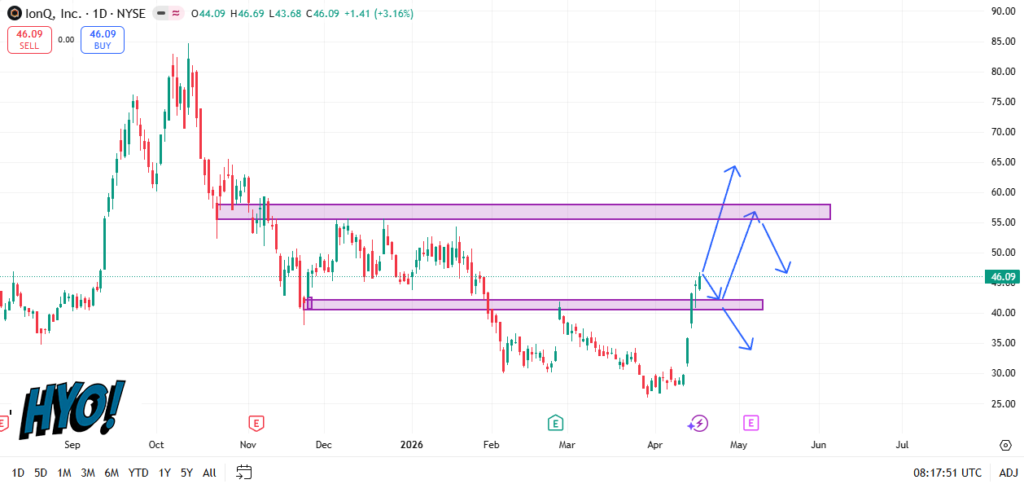
The third layer is the financial market expression of this ecosystem, often referred to as quantum stocks. These include pure play companies focused entirely on quantum technologies as well as diversified firms that are integrating quantum research into broader portfolios. Market valuations in this segment are driven less by current earnings and more by future expectations. Investors are pricing in the potential for quantum breakthroughs to disrupt industries ranging from pharmaceuticals to logistics and cybersecurity.
This creates a dynamic where capital flows into the sector ahead of proven profitability. It is similar to how artificial intelligence investments surged before clear monetization models were fully established. The implication is that volatility is high, and valuations can detach from near term fundamentals. For sophisticated investors, this presents both opportunity and risk. Timing and selection become critical, as not all participants in the ecosystem will survive the transition from research to commercialization.
For individuals and small business owners, participation in this emerging landscape does not require direct involvement in quantum physics. The more practical approach is to engage with adjacent opportunities created by the ecosystem. One pathway is through service integration. As larger companies experiment with quantum solutions, they will require support in data preparation, workflow integration, and user interface development. Small technology firms can position themselves as intermediaries that translate complex quantum capabilities into usable business tools.
Another avenue is education and specialization. As demand for quantum literacy increases, there will be a growing market for training, consulting, and content creation. Entrepreneurs who can simplify complex concepts and deliver them to businesses in an actionable format will find a niche. This is particularly relevant in regions where awareness is still low but adoption is expected to follow global trends.
Investment participation is also accessible through public markets, though it requires careful strategy. Rather than focusing solely on pure quantum companies, a more balanced approach may involve exposure to firms that support the ecosystem such as semiconductor manufacturers, cloud providers, and enterprise software companies. These entities are more likely to generate stable revenue while still benefiting from quantum advancements.
In my view, the most important insight is that the quantum transition will not occur as a sudden disruption but as a gradual integration into existing systems. This means that value creation will be distributed across multiple layers rather than concentrated in a single breakthrough moment. Those who position themselves within the ecosystem, even indirectly, are more likely to capture sustainable benefits.
The current phase can be described as an infrastructure buildout period. Capital is being deployed, talent is being trained, and early use cases are being tested. While the timeline for full scale impact remains uncertain, the direction is clear. Quantum computing is evolving from a theoretical pursuit into a strategic industry. The connection between technology, economic structure, and financial markets forms a reinforcing cycle that will continue to attract attention and investment.
For those willing to engage early, the opportunity lies not in predicting the exact moment of breakthrough but in understanding the structure of the ecosystem and identifying where value is already beginning to accumulate.
Leave a Reply