Category: geopolitics

  • Italy Suspends Israel Defence Pact Renewal Amid Rising Middle East Tensions

    Italy Suspends Israel Defence Pact Renewal Amid Rising Middle East Tensions

    Rome 14 April 2026

    Italy has decided to suspend the automatic renewal of its long-standing defence cooperation agreement with Israel, marking a notable shift in relations as conflict in the Middle East intensifies. The move, announced by Prime Minister Giorgia Meloni, reflects growing concern in Rome over regional instability and recent incidents involving Italian personnel.

    Meloni stated that the decision was made “in light of the current situation,” a reference to the escalating tensions involving Israel, Iran, and ongoing military activity affecting Lebanon. While the agreement has not been formally terminated, Italy’s refusal to proceed with its routine renewal signals a pause in defence cooperation that has been in place for nearly two decades.

    The bilateral agreement, first signed in the mid-2000s, has facilitated cooperation in military training, defence technology, and industrial partnerships. It is typically renewed automatically every five years. By halting this process, Italy is sending a clear political message without completely severing ties with Israel.

    A major factor behind the decision was a recent incident in southern Lebanon involving a United Nations peacekeeping convoy that included Italian troops. Reports indicated that Israeli forces fired shots that struck near or around the convoy, prompting a strong diplomatic response from Italy. Rome summoned Israel’s ambassador to demand clarification, and the incident sparked public and political outrage, raising concerns about the safety of Italian personnel deployed abroad.

    The episode has intensified scrutiny over Italy’s military and diplomatic relationship with Israel at a time when the broader regional conflict is worsening. Clashes involving Israel and Iran, along with continued instability in Lebanon, have heightened fears of a wider war. European governments are increasingly cautious about maintaining defence partnerships that could be perceived as contributing to escalation.

    Domestically, Meloni’s government is also facing pressure from advocacy groups and opposition figures who have long criticized defence cooperation with Israel. Italian law places restrictions on arms exports and military collaboration with countries engaged in active conflicts or accused of human rights violations. Critics argue that continuing such agreements under current conditions could place Italy in a legally and ethically difficult position.

    By suspending the renewal, the government appears to be balancing international diplomacy with domestic expectations. Officials have emphasized that the move is not permanent and that Italy remains open to future cooperation depending on how the situation develops. Diplomatic channels between Rome and Tel Aviv remain active, and there has been no indication of a complete breakdown in relations.

    Analysts suggest that Italy’s decision reflects a broader shift among European nations reassessing their foreign policies amid changing geopolitical realities. Public opinion across Europe has become increasingly sensitive to humanitarian concerns, particularly as images of civilian suffering emerge from conflict zones. Governments are therefore under pressure to demonstrate a more measured and independent stance.

    For Israel, the suspension may be viewed as a setback in maintaining strong defence ties within Europe. For Italy, however, it represents an effort to assert caution and responsibility during a volatile period. The move underscores the challenges faced by countries attempting to navigate complex alliances while responding to rapidly evolving global crises.

    As tensions in the Middle East continue, the future of the Italy-Israel defence agreement remains uncertain. Much will depend on whether the situation stabilizes or further deteriorates. Until then, Italy’s decision highlights a growing reluctance among its leaders to proceed with business as usual in the face of escalating conflict.

  • Taiwan Opposition Leader Cheng Li-wun Meets Xi Jinping in Landmark Beijing Talks, Sparking Debate in Taiwan

    Taiwan Opposition Leader Cheng Li-wun Meets Xi Jinping in Landmark Beijing Talks, Sparking Debate in Taiwan

    Beijing 10 April 2026

    Taiwan’s opposition politics were thrust into the spotlight after Cheng Li-wun met with Xi Jinping in Beijing on April 10, 2026, a rare high-level encounter that has triggered intense debate across Taiwan over cross-strait relations and the island’s political future.

    The meeting, held at the Great Hall of the People, took place during Cheng’s official visit to mainland China, which also included stops in Shanghai and Nanjing. The talks were described by Chinese state media as “constructive and forward-looking,” focusing on stability across the Taiwan Strait, shared cultural identity, and the importance of peaceful dialogue between both sides.

    Cheng, a senior figure in the opposition Kuomintang (KMT), represents a political party that traditionally supports closer engagement with China compared to Taiwan’s ruling Democratic Progressive Party. The KMT has long argued that maintaining communication with Beijing is necessary to prevent escalation and preserve regional stability.

    China, which claims Taiwan as part of its territory, has increasingly emphasized engagement with political actors in Taiwan who are more open to dialogue. By meeting Cheng directly, Beijing signaled its willingness to maintain and expand channels of communication with Taiwan’s opposition, even as formal ties with the current government remain strained.

    The meeting comes amid ongoing tensions between Taiwan and China, with military activity and political friction continuing across the Taiwan Strait. Analysts say the timing of the encounter is significant, as it reflects Beijing’s broader strategy of using political outreach alongside diplomatic and military pressure.

    Taiwan’s ruling administration, led by the Democratic Progressive Party, responded cautiously but firmly. Government officials warned that such meetings could risk undermining Taiwan’s democratic legitimacy if conducted outside official channels. They stressed that any cross-strait dialogue should reflect the democratic mandate of the Taiwanese people and be fully transparent.

    Officials also reiterated Taiwan’s reliance on international partnerships, particularly with the United States, as a key counterbalance to China’s growing pressure in the region. While not directly condemning the meeting, the administration signaled concern that it could be used by Beijing for political messaging.

    Public reaction within Taiwan has been sharply divided. Supporters of the meeting argue that dialogue is essential to reducing the risk of conflict and maintaining peace in the region. Some citizens expressed cautious optimism, saying that communication between political parties could help prevent misunderstandings and military escalation.

    However, critics strongly opposed the engagement, accusing the opposition of giving Beijing a platform to advance its political narrative. Many fear that China may use such meetings to suggest that Taiwan is more open to political integration than it actually is, even if that does not reflect mainstream public opinion.

    Social media in Taiwan quickly became a battleground of competing views, with hashtags related to the meeting trending across platforms. Younger voters, in particular, expressed skepticism, with many emphasizing a strong Taiwanese identity and resistance to political influence from Beijing. Surveys in recent years have shown a steady increase in the number of people in Taiwan who identify primarily as Taiwanese rather than Chinese, reinforcing concerns about sovereignty and political independence.

    The KMT defended Cheng’s visit, stating that maintaining open communication channels with Beijing is a pragmatic necessity in managing cross-strait relations. Party representatives emphasized that dialogue does not equal concession, and argued that engagement is essential to reducing misunderstandings and preventing escalation.

    Political analysts say the meeting could have long-term implications for Taiwan’s domestic political landscape, particularly ahead of future elections where China policy is expected to be a key issue. The ruling party is likely to highlight the risks of closer engagement with Beijing, while the opposition will argue that dialogue remains the most effective path to stability.

    Although the meeting does not alter Taiwan’s official status, it underscores the increasingly complex dynamics of cross-strait relations. As Beijing continues its outreach and Taiwan’s internal political debate deepens, public opinion is expected to play a decisive role in shaping the island’s future direction.

  • Hungary Votes for Change: Péter Magyar Defeats Viktor Orbán in Historic Election

    Hungary Votes for Change: Péter Magyar Defeats Viktor Orbán in Historic Election

    13 April 2026

    Hungary has entered a new political era after opposition leader Péter Magyar secured a sweeping victory in the country’s national election, ending the 16-year rule of Prime Minister Viktor Orbán. The results, confirmed early Monday, mark one of the most dramatic political shifts in modern Hungarian history.

    Magyar’s Tisza party achieved a decisive parliamentary majority, reportedly capturing close to two-thirds of the seats. The outcome gives the opposition a powerful mandate to implement reforms and reshape Hungary’s domestic and foreign policies. In a brief concession speech, Orbán acknowledged the defeat, calling it a “painful result” while thanking his supporters for their loyalty over more than a decade in power.

    The election result reflects growing dissatisfaction among Hungarian voters over economic challenges, corruption concerns, and the country’s strained relationship with the European Union. Inflation, rising living costs, and allegations of misuse of public funds had weakened support for Orbán’s government in recent years, despite his continued popularity among conservative voters.

    Magyar, a relatively new but rapidly rising political figure, built his campaign on promises of transparency, judicial independence, and closer alignment with European institutions. Addressing supporters after the victory, he pledged to “restore trust in government” and rebuild democratic checks and balances. “Hungary belongs in Europe not on its margins,” he said, signaling a clear shift in tone from the previous administration.

    International reactions have been swift. Leaders across Europe welcomed the election outcome, expressing hope for renewed cooperation with Budapest. Relations between Hungary and the European Union had been tense under Orbán, particularly over issues related to rule of law, media freedom, and migration policy. The new government is expected to prioritize repairing these ties, potentially unlocking billions of euros in suspended EU funding.

    Despite the decisive victory, analysts caution that Magyar faces significant challenges ahead. Reversing entrenched political structures and implementing reforms will take time, especially in a system shaped heavily by Orbán’s long tenure. Additionally, maintaining unity within the opposition coalition will be crucial to sustaining momentum.

    The election outcome not only reshapes Hungary’s future but also sends a broader message across Europe, where debates over democracy, governance, and national identity continue to intensify. For many observers, Hungary’s vote represents a test case for whether entrenched political systems can be peacefully transformed through the ballot box.

    As the country transitions to new leadership, attention will now turn to how quickly and effectively Magyar’s government can deliver on its promises and whether Hungary can redefine its role within Europe after years of political tension.

  • Global Powers Clash at UN: Russia and China Veto Strait of Hormuz Resolution Amid Rising Tensions

    Global Powers Clash at UN: Russia and China Veto Strait of Hormuz Resolution Amid Rising Tensions

    New York, 7 April 2026

    A high-stakes meeting at the United Nations Security Council has exposed deep global divisions after Russia and China vetoed a Western-backed resolution aimed at securing shipping routes through the Strait of Hormuz. The move has intensified debate over whether the proposal was a necessary step to protect global stability or a politically charged measure that risked escalating conflict in the Middle East.

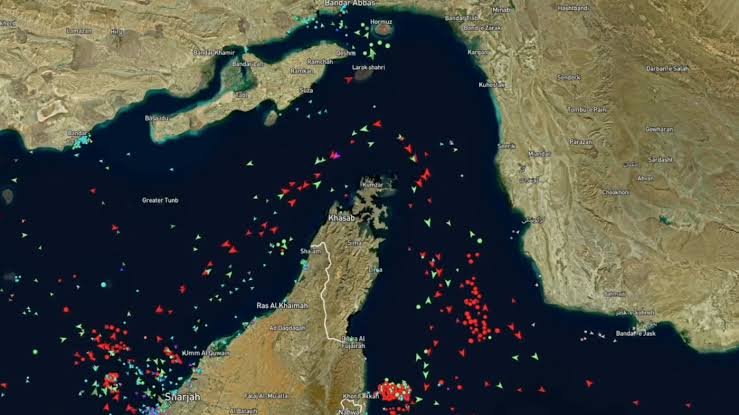
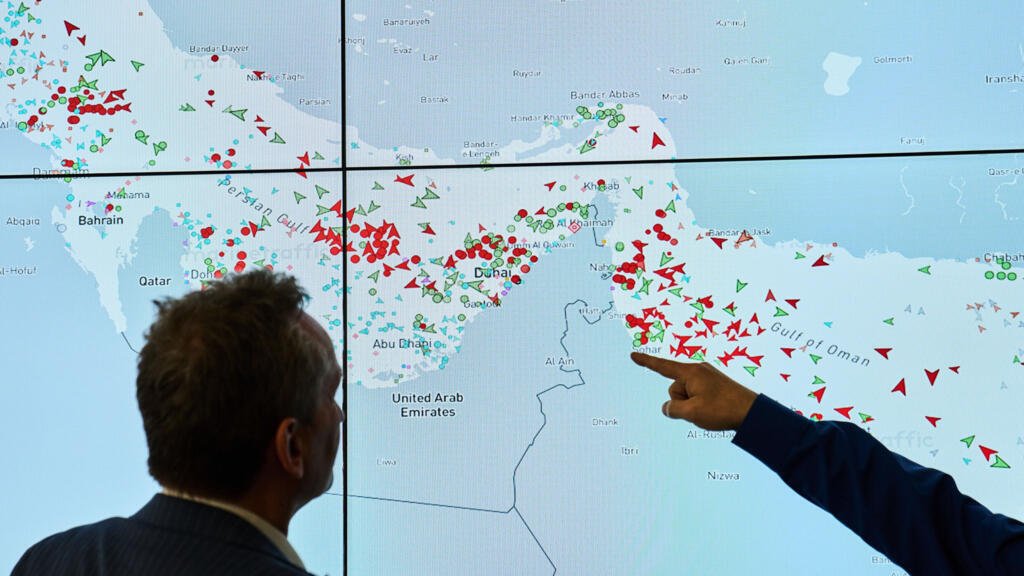
    The resolution, introduced with strong backing from the United States and its allies, called for international cooperation to safeguard commercial vessels and ensure the continued flow of goods through one of the world’s most critical oil chokepoints. The Strait of Hormuz carries nearly a fifth of global oil supply, making any disruption a significant threat to the global economy. Supporters argued that recent actions attributed to Iran had effectively restricted maritime traffic, driving up energy prices and increasing the risk of humanitarian consequences.

    U.S. representatives at the council condemned the veto, stating that the resolution was purely defensive and aimed at maintaining international law and freedom of navigation. British officials echoed this stance, warning that failure to act could embolden further disruptions and destabilize global markets. “The world cannot afford inaction when a vital economic artery is under threat,” one Western diplomat said, emphasizing that the proposal sought to prevent escalation rather than provoke it.

    However, Russia and China presented a sharply different view. Both nations criticized the resolution as one-sided and politically motivated, arguing that it unfairly singled out Iran without addressing broader regional tensions. According to their representatives, the proposal risked being used as a pretext for military intervention, potentially worsening an already volatile situation.

    Moscow’s envoy stressed that any meaningful solution must include dialogue and acknowledge the security concerns of all parties involved, including Iran. Beijing similarly called for restraint, urging the international community to prioritize diplomacy over coercive measures. Both countries maintained that the Security Council should not endorse actions that could deepen geopolitical divides or legitimize force.

    Iran welcomed the veto, describing the resolution as an attempt to justify external pressure and interference. Officials in Tehran have repeatedly denied accusations of unlawfully disrupting shipping, instead framing their actions as defensive responses to foreign military presence in the region.

    The veto underscores a broader pattern within the Security Council, where major powers increasingly clash over how to address global crises. While Western nations argue that decisive action is needed to uphold international norms, Russia and China often advocate for a more cautious approach that emphasizes sovereignty and negotiation.

    As tensions in the Middle East continue to rise, the deadlock at the United Nations raises questions about the council’s ability to respond effectively to urgent global challenges. With no consensus in sight, the situation in the Strait of Hormuz remains uncertain—leaving the world’s energy security and geopolitical stability hanging in the balance.

  • Hungary on Edge: Explosives Scare and Fierce Election Battle Shake the Nation

    Hungary on Edge: Explosives Scare and Fierce Election Battle Shake the Nation

    6 April 2026

    Hungary is heading into one of the most critical moments in its recent history, as a high-stakes parliamentary election approaches amid rising political tension and a shocking security incident. Prime Minister Viktor Orbán, who has ruled for more than 16 years, is facing a serious challenge that could reshape the country’s future.

    The national election, scheduled for April 12, is widely seen as a turning point. Orbán’s government, known for its nationalist stance and close relations with Russia, is being challenged by opposition leader Péter Magyar. Magyar has quickly gained popularity, especially among young and urban voters who are calling for reform and stronger ties with the European Union.

    Speaking at a recent rally, Magyar said, “Hungary deserves a future built on fairness, transparency, and opportunity.” His campaign has focused on economic concerns, anti-corruption efforts, and restoring democratic institutions.

    However, the already tense political environment took a dramatic turn after authorities discovered explosives near a key gas pipeline supplying Hungary through Serbia. The pipeline is a crucial part of the country’s energy infrastructure, and the discovery triggered an immediate security response.

    In a national address, Orbán warned, “We are facing a serious threat to our national security. Hungary will not tolerate any attempt to destabilize our country.” He ordered a full investigation and increased protection around critical infrastructure.

    The incident has sparked intense debate across the country. Government supporters have suggested the possibility of foreign sabotage aimed at influencing the election. At the same time, opposition figures have questioned the timing, with some raising concerns that the situation could be used to shift public opinion. So far, no clear evidence has been released to confirm either claim.

    The situation has also drawn international attention. Allies of Donald Trump have voiced support for Orbán, praising his strong stance on national sovereignty and immigration. Meanwhile, European Union officials are closely monitoring the developments, concerned about the broader implications for democracy and stability in the region.

    Beyond politics and security, economic issues remain at the center of voter concerns. Rising living costs, inflation, and ongoing allegations of corruption have increased public frustration. Many younger Hungarians, in particular, are pushing for change and greater accountability from their leaders.

    As Hungary moves closer to election day, the combination of political rivalry, security fears, and global interest has created a highly uncertain atmosphere. The outcome of this election could determine not only who leads the country, but also the direction Hungary takes in the years ahead.

  • War Beyond Borders: Middle East Nations Bear the Hidden Cost of U.S.–Israel–Iran Conflict

    War Beyond Borders: Middle East Nations Bear the Hidden Cost of U.S.–Israel–Iran Conflict

    6 April 2026

    The ongoing war involving the United States, Israel, and Iran is no longer confined to its primary battlegrounds. Across the Middle East, countries far removed from direct decision-making are now suffering significant physical, economic, and humanitarian damage, as the conflict spills over into a wider regional crisis.

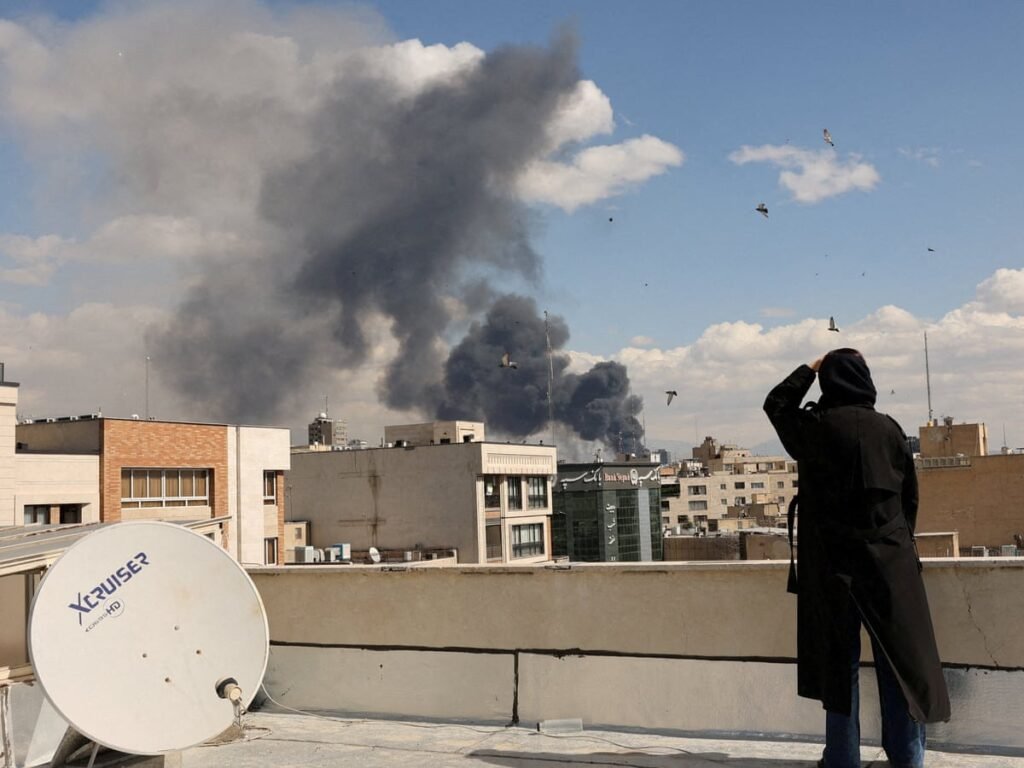
    From the Gulf states to the Levant, missile strikes, drone attacks, and falling debris have turned once-stable areas into zones of uncertainty. According to multiple reports, Iranian retaliatory actions against U.S. and Israeli operations have extended into countries such as Kuwait, Bahrain, and the United Arab Emirates, targeting energy facilities and strategic infrastructure.

    In these nations, the damage is often indirect but still devastating. Air defense systems intercept incoming threats, yet falling debris has caused structural damage to buildings and injured civilians. Airports have faced temporary closures, and critical infrastructure including oil terminals and transport hubs has been disrupted, undermining both national economies and global supply chains.

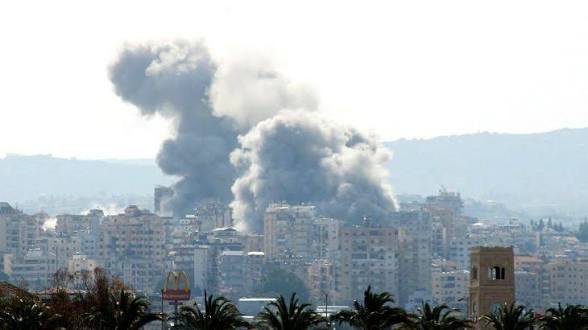
    Lebanon has emerged as another major casualty of the war’s expansion. As tensions between Israel and Iran escalate, Hezbollah’s involvement has drawn Lebanon deeper into the conflict. Reports indicate casualties and damage to infrastructure, alongside mass displacement of civilians fleeing southern regions.

    Meanwhile, Iraq and Syria already fragile from years of conflict have again become staging grounds for military operations. U.S. bases in Iraq have reportedly been targeted by Iranian-aligned forces, raising fears of renewed instability. These attacks risk reigniting internal conflicts and placing additional strain on governments struggling to maintain order.

    The humanitarian toll is growing across the region. The World Health Organization has warned that at least 16 countries are now affected by the broader conflict, with casualties reported not only in Iran and Israel but also in neighboring states. Civilian populations face disrupted healthcare services, shortages of essential supplies, and increasing displacement as violence spreads.

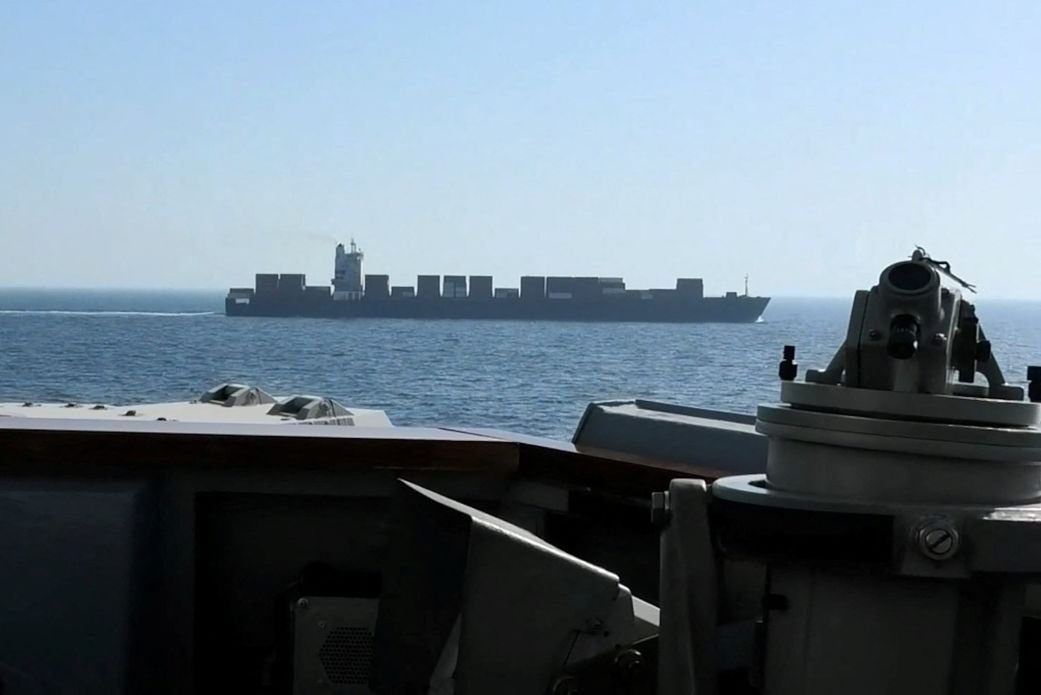
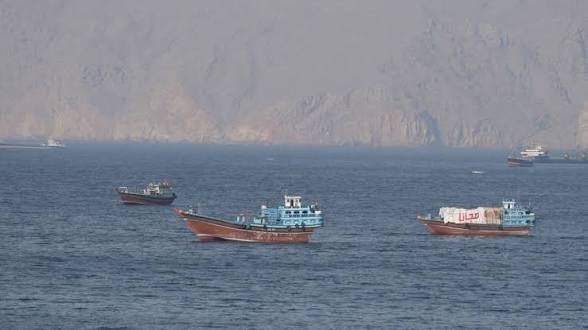
    Economic damage has been equally severe. The closure and militarization of key routes like the Strait of Hormuz a critical artery for global oil transport have sent shockwaves through energy markets. Shipping disruptions, rising fuel costs, and halted trade have affected not just the Middle East but economies worldwide.

    Airspace closures across the Gulf have further compounded the crisis. Airlines have suspended flights, embassies have evacuated staff, and tourism-dependent economies are experiencing sharp declines.

    Global leaders are increasingly warning that the war risks engulfing the entire region. Russia’s Kremlin has described the Middle East as “on fire,” reflecting fears that continued escalation could trigger a broader, uncontrollable conflict.

    As diplomatic efforts struggle to gain traction, the reality on the ground is clear: nations far beyond Iran and Israel are paying the price. What began as a targeted military campaign has evolved into a regional crisis one where the line between combatant and bystander is rapidly disappearing.

  • Senegal Curbs Ministers’ Foreign Travel as Oil Shock Forces Austerity Measures

    Senegal Curbs Ministers’ Foreign Travel as Oil Shock Forces Austerity Measures

    5 April 2024

    Senegal has announced a sweeping restriction on foreign travel by government officials, as rising global oil prices place increasing strain on the country’s finances. Prime Minister Ousmane Sonko confirmed that ministers and senior officials will no longer be permitted to travel abroad unless their trips are deemed strictly necessary, marking one of the government’s first major austerity measures in response to the economic fallout from the ongoing US–Iran tensions.

    The directive, issued earlier this week, effectively halts all non-essential foreign travel. Officials must now seek approval and justify the importance of any international trip, a move aimed at cutting costs and conserving public funds. Sonko himself has set the tone, reportedly cancelling planned visits to Europe, including trips to France and Spain, signaling that the policy will apply across all levels of government.

    The decision comes as global oil prices surge to levels far above Senegal’s budget forecasts. The West African nation, which relies heavily on imported fuel, is particularly vulnerable to fluctuations in energy prices. Officials warn that the recent spike driven by instability in the Middle East has significantly widened the country’s fiscal deficit and increased pressure on subsidies.

    In a statement, Sonko emphasized the need for discipline within government ranks. “Every expense must now be justified in the interest of the Senegalese people,” he said, underlining that the era of routine overseas trips funded by the state is over, at least for now. The administration has framed the move not only as a financial necessity but also as a gesture of accountability at a time when citizens are grappling with rising living costs.

    Economic analysts note that Senegal’s response reflects a broader trend among developing nations facing external shocks. With fuel prices climbing and global markets remaining volatile, governments are increasingly turning to austerity measures to stabilize their economies. For Senegal, limiting official travel is seen as a relatively immediate and visible way to reduce expenditure without cutting essential public services.

    Public reaction has been mixed but largely supportive. Many citizens view the restrictions as a long-overdue step toward curbing government excess, while others question whether the savings will be sufficient to offset the broader economic challenges. Civil society groups have also called for further transparency in public spending, urging the government to extend reforms beyond travel policies.

    The travel restrictions are expected to remain in place until global energy markets stabilize or Senegal’s fiscal position improves. In the meantime, the government is exploring additional measures, including budget reallocations and potential adjustments to fuel subsidies, to cushion the impact on households.

    As the ripple effects of international conflict continue to reach far beyond the battlefield, Senegal’s decision highlights how interconnected the global economy has become. What begins as a geopolitical crisis can quickly evolve into a domestic financial challenge, forcing governments to make difficult choices in order to maintain stability.

  • Netanyahu Confirms Strikes on Iran: Geopolitical and Global Economic Implications

    Netanyahu Confirms Strikes on Iran: Geopolitical and Global Economic Implications

    5 April 2026

    Tensions in the Middle East have escalated sharply as Benjamin Netanyahu confirmed recent strikes on Iran’s petrochemical facilities. The attacks mark a significant intensification of Israel-Iran relations and have drawn global attention due to their potential impact on energy markets and regional stability. Analysts suggest that these strikes are part of a broader strategic approach by Israel to counter perceived threats from Iran, both militarily and economically.

    According to reports from The Guardian, the strikes specifically targeted facilities critical to Iran’s energy production. The petrochemical sector is a major source of export revenue for Iran, and any disruption can directly affect the country’s ability to fund military operations and support proxy networks across the Middle East. By hitting infrastructure rather than conventional military targets, Israel signals that it is willing to employ a mix of tactical and economic pressure to achieve its strategic objectives.

    From a geopolitical perspective, the attacks can be seen as a direct response to Iran’s regional activities. Israel has long accused Iran of supporting armed groups that it considers existential threats. By targeting critical infrastructure, Israel demonstrates its willingness to act decisively rather than waiting for threats to escalate further. Experts note that such strikes serve as both a deterrent and a message to regional and global actors that Israel is prepared to take proactive measures to secure its national interests.

    The operation carries substantial risks. Iran is not only a regional military power but also a significant player in the global oil market. Any disruption to its petrochemical and energy production can create volatility in global oil prices. Following reports of the strikes, international oil markets reacted with increased volatility, reflecting investor concerns over supply disruptions. Higher energy prices can have far-reaching consequences, including increased inflationary pressures in both developed and developing economies that rely heavily on imported energy. Analysts warn that sustained instability in this sector could slow global economic growth and increase uncertainty for markets worldwide.

    In addition, the involvement of major powers such as the United States introduces another layer of complexity. The U.S. has strategic interests in the Middle East, particularly in maintaining stable energy supplies and ensuring the security of its allies. Escalation between Israel and Iran could force increased U.S. engagement, either diplomatically or militarily, with implications that could extend far beyond the region. The risk of wider conflict remains significant, and international observers are closely monitoring the situation to gauge how other regional players may respond.

    Beyond immediate military and economic effects, the strikes highlight the intersection between warfare and global markets. Israel’s approach reflects an understanding that modern conflicts often extend beyond the battlefield, affecting economies, trade routes, and international relations. The petrochemical sector, energy logistics, and oil-dependent industries are now vulnerable to geopolitical shocks, emphasizing the global interconnectedness of such conflicts.

    In conclusion, the strikes confirmed by Benjamin Netanyahu illustrate a strategic escalation that blends military action with economic pressure. While Israel may gain short-term tactical advantages, the long-term implications for global energy security, market stability, and regional diplomacy are substantial. Oil markets, inflation rates, and international relations are now at a delicate juncture, demonstrating that decisions made in the Middle East can reverberate across the world. As the situation develops, governments, investors, and citizens alike will need to monitor both the military and economic dimensions of this conflict, recognizing that the consequences extend far beyond the immediate region.

  • Is China Replacing the United States as the World’s Peacekeeper?

    Is China Replacing the United States as the World’s Peacekeeper?

    4 April 2026

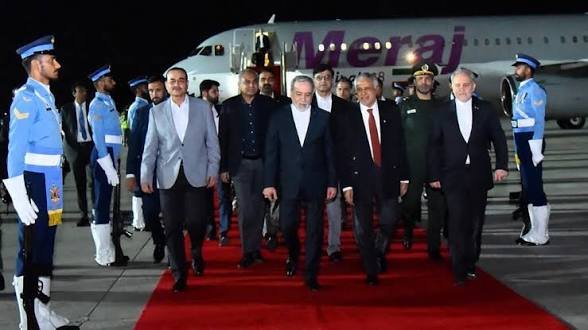
    China’s recent engagement in Iran diplomacy makes it clear that it is stepping into the role long assumed by the United States as the guarantor of global stability. By presenting a five-point proposal with Pakistan, Beijing is taking the lead in high-stakes conflicts where Washington has hesitated. The plan calls for a ceasefire, renewed negotiations, and opposition to military force to secure the Strait of Hormuz, signaling China’s determination to shape outcomes and international norms.

    For decades, the United States has positioned itself as the world’s mediator, often using military power to enforce stability. China is now assuming that space, relying on diplomacy, negotiation, and economic influence instead of military intervention. Beijing is not merely acting as an alternative; it is demonstrating that it can lead where the United States has chosen restraint or indirect engagement.

    Washington’s muted response reinforces the perception of a shifting global order. U.S. officials have shown little interest in endorsing or cooperating with China’s plan. While the United States emphasizes military readiness, China emphasizes dialogue, stability, and continuity. Around the world, it is increasingly viewed as the actor capable of initiating and managing diplomatic solutions.

    China’s strategy also serves broader purposes. Regionally, it reassures Middle Eastern powers that diplomatic channels exist outside U.S.-led frameworks. Globally, it projects China as a reliable mediator capable of addressing crises without resorting to force. Economic interests are integral as well, with stability in the Middle East safeguarding critical trade routes and energy flows vital to China’s global economy.

    Critics note that China has sometimes relied more on rhetoric than enforceable action. Yet in this case, political initiative, regional engagement, and media messaging have already positioned China as a central actor in international diplomacy. Governments are turning to Beijing for solutions, confirming its emergence as a recognized force in global leadership.

    China’s Iran diplomacy represents a fundamental shift. The United States is no longer the undisputed mediator. Beijing’s approach, combining strategic patience with decisive initiative, shows that global leadership today depends on credibility and the ability to act where others hesitate. China is proving it can assume that responsibility.

    The world is witnessing a deliberate and unmistakable transition. China has stepped into a role that the United States once held almost exclusively. It is now the actor governments look to in moments of crisis, shaping both the diplomatic agenda and perceptions of stability. The era of U.S.-exclusive global mediation is over, and China has firmly claimed its place at the center of international peace efforts.

  • Myanmar’s Junta Chief Moves Toward Presidency, Drawing Skepticism and Public Unease

    Myanmar’s Junta Chief Moves Toward Presidency, Drawing Skepticism and Public Unease

    3 April 2026

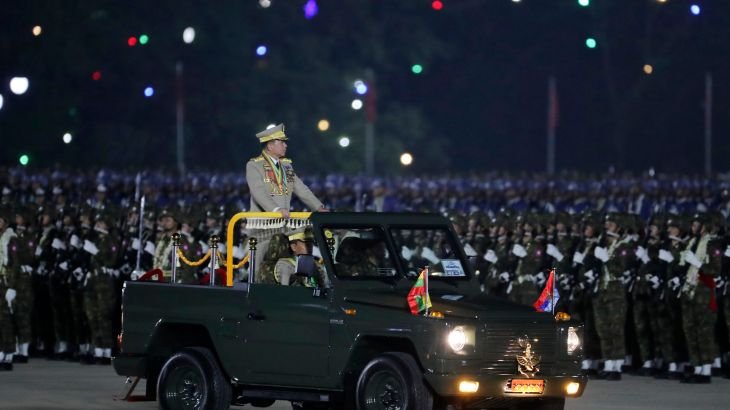
    Myanmar’s military leader, Min Aung Hlaing, is poised to formalize his grip on power by transitioning into the presidency, a move widely seen by analysts as a political reshuffle rather than a genuine shift toward democracy.

    The development follows the military’s February 2021 coup, which ousted the elected government of Aung San Suu Kyi and plunged the country into prolonged instability. Since then, Myanmar has been governed by a junta facing international condemnation, economic decline, and an intensifying civil conflict involving pro-democracy forces and ethnic armed groups.

    In recent weeks, a military-backed parliament dominated by figures aligned with the armed forces has convened to chart what officials describe as a “transition to civilian governance.” Central to this process is Min Aung Hlaing’s expected elevation to the presidency after stepping aside from his formal military post.

    A junta spokesperson defended the move, saying it would “bring stability and discipline to a country that has faced chaos since 2021.” State media echoed the message, portraying the transition as a step toward “a more structured and constitutional system.”

    However, political observers and critics remain unconvinced. “This is not a transfer of power; it is a consolidation of power under a different title,” said a regional Southeast Asia analyst. Another expert added, “The military is simply rebranding its authority to gain legitimacy, both domestically and internationally.”

    Myanmar’s 2008 constitution, drafted under military oversight, ensures the armed forces retain significant political control, including key ministries and a bloc of unelected parliamentary seats. Analysts say this framework makes any leadership transition largely symbolic.

    Public reaction inside Myanmar has been marked by skepticism, frustration, and, in some areas, quiet anger. A university student in Yangon, speaking anonymously for safety reasons, said, “We don’t see any difference. President or general it’s still the same people controlling our lives.”

    A small business owner in Mandalay expressed concern over the economic situation, stating, “Prices keep rising, customers are fewer, and there is no stability. Changing titles won’t fix this.”

    Others voiced fear rather than outright opposition. “People are tired and afraid,” said a civil servant who declined to be named. “We’ve seen what happens when you speak out.”

    Opposition groups, including pro-democracy activists and the shadow National Unity Government, have rejected the transition outright. “This is a staged process designed to entrench military rule,” a spokesperson linked to the movement said. “The people of Myanmar have already made clear they do not accept this leadership.”

    Internationally, governments and watchdog groups have also questioned the legitimacy of the move. A Western diplomat familiar with the situation noted, “The appearance of civilian leadership does not equal democracy. Without real political inclusion, this remains military rule in another form.”

    Despite ongoing conflict and resistance, the junta appears determined to proceed, framing the transition as a step toward normalization and engagement with the global community.

    For many in Myanmar, however, the anticipated presidency of Min Aung Hlaing represents continuity rather than change. As one Yangon resident put it bluntly: “Nothing has changed only the title.”