3 April 2026
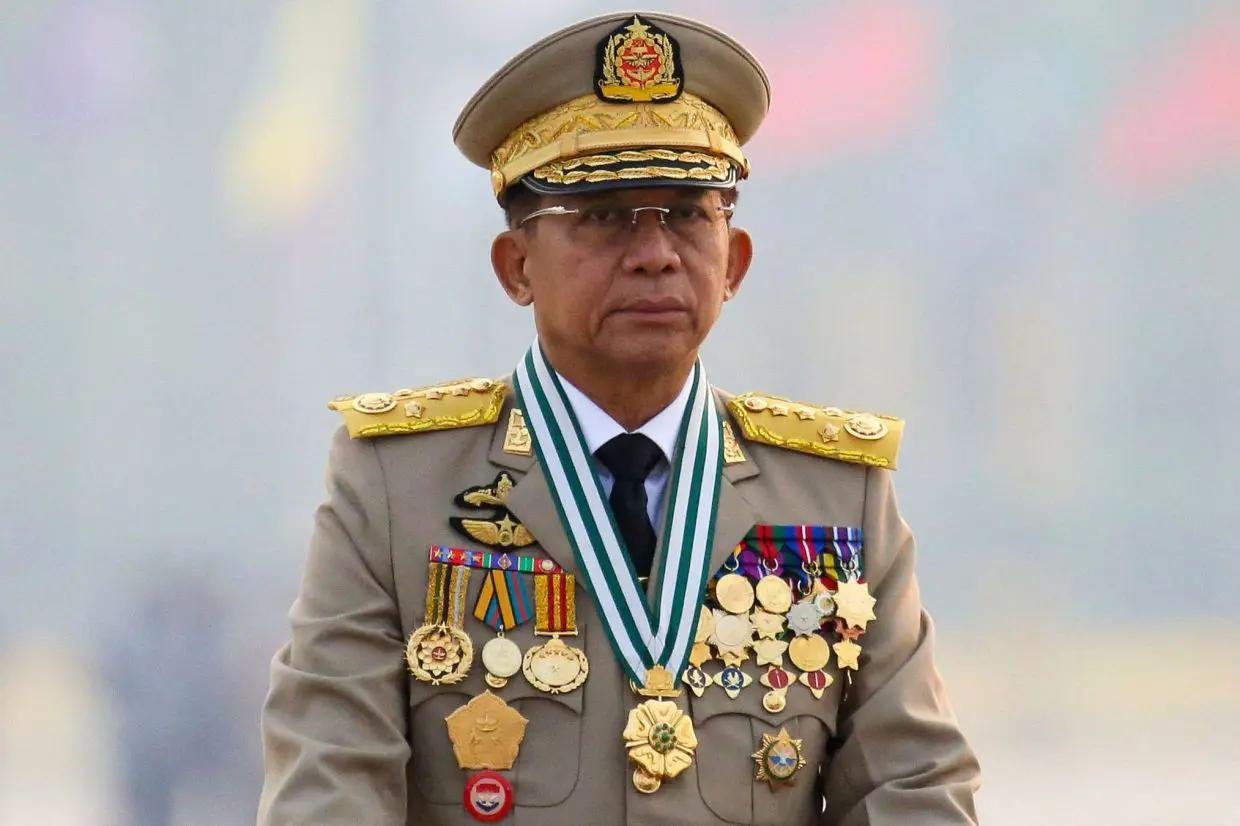
Myanmar’s military leader, Min Aung Hlaing, is poised to formalize his grip on power by transitioning into the presidency, a move widely seen by analysts as a political reshuffle rather than a genuine shift toward democracy.
The development follows the military’s February 2021 coup, which ousted the elected government of Aung San Suu Kyi and plunged the country into prolonged instability. Since then, Myanmar has been governed by a junta facing international condemnation, economic decline, and an intensifying civil conflict involving pro-democracy forces and ethnic armed groups.
In recent weeks, a military-backed parliament dominated by figures aligned with the armed forces has convened to chart what officials describe as a “transition to civilian governance.” Central to this process is Min Aung Hlaing’s expected elevation to the presidency after stepping aside from his formal military post.
A junta spokesperson defended the move, saying it would “bring stability and discipline to a country that has faced chaos since 2021.” State media echoed the message, portraying the transition as a step toward “a more structured and constitutional system.”
However, political observers and critics remain unconvinced. “This is not a transfer of power; it is a consolidation of power under a different title,” said a regional Southeast Asia analyst. Another expert added, “The military is simply rebranding its authority to gain legitimacy, both domestically and internationally.”
Myanmar’s 2008 constitution, drafted under military oversight, ensures the armed forces retain significant political control, including key ministries and a bloc of unelected parliamentary seats. Analysts say this framework makes any leadership transition largely symbolic.
Public reaction inside Myanmar has been marked by skepticism, frustration, and, in some areas, quiet anger. A university student in Yangon, speaking anonymously for safety reasons, said, “We don’t see any difference. President or general it’s still the same people controlling our lives.”
A small business owner in Mandalay expressed concern over the economic situation, stating, “Prices keep rising, customers are fewer, and there is no stability. Changing titles won’t fix this.”
Others voiced fear rather than outright opposition. “People are tired and afraid,” said a civil servant who declined to be named. “We’ve seen what happens when you speak out.”
Opposition groups, including pro-democracy activists and the shadow National Unity Government, have rejected the transition outright. “This is a staged process designed to entrench military rule,” a spokesperson linked to the movement said. “The people of Myanmar have already made clear they do not accept this leadership.”
Internationally, governments and watchdog groups have also questioned the legitimacy of the move. A Western diplomat familiar with the situation noted, “The appearance of civilian leadership does not equal democracy. Without real political inclusion, this remains military rule in another form.”
Despite ongoing conflict and resistance, the junta appears determined to proceed, framing the transition as a step toward normalization and engagement with the global community.
For many in Myanmar, however, the anticipated presidency of Min Aung Hlaing represents continuity rather than change. As one Yangon resident put it bluntly: “Nothing has changed only the title.”
Leave a Reply