29 March, 2026
The United States has significantly expanded its military presence around Iran in recent weeks, deploying thousands of additional troops in what officials describe as a precautionary move amid rising tensions. While Washington has not confirmed any plans for a ground invasion, the scale and speed of the buildup have fueled concerns of a broader conflict in the region.
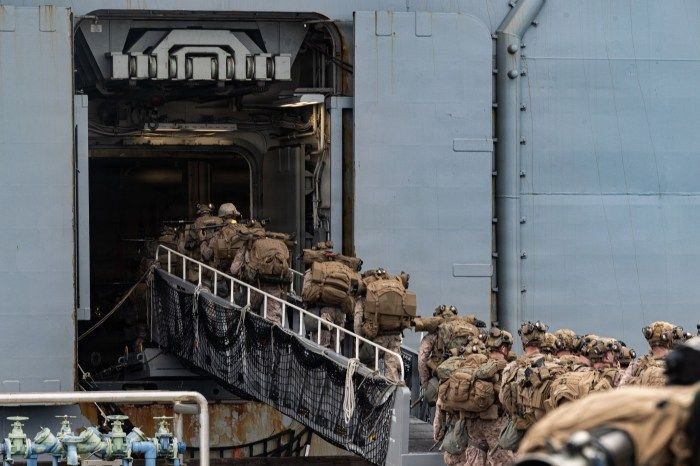
The latest deployments began in mid-March, with U.S. Marines and naval forces sent to strategic locations across the Middle East. Amphibious assault ships carrying rapid-response units, alongside elite airborne forces, have strengthened America’s ability to react quickly to any escalation. Additional reinforcements remain on standby, with reports suggesting that troop levels could rise further if the situation deteriorates.
Officials insist the move is primarily aimed at deterrence, signaling to Tehran that any aggressive actions will be met with force. However, military analysts argue that the composition of troops deployed suggests readiness not only for defense, but also for limited offensive operations. These could include targeted strikes on military infrastructure, special forces missions, or securing key maritime routes such as the Strait of Hormuz.
The buildup also reflects growing fears of a wider regional spillover. Armed groups aligned with Iran have increased activity across multiple fronts, raising the risk of miscalculation. By positioning forces nearby, the U.S. aims to contain the conflict and protect allies without immediately committing to full-scale war.
Still, the consequences of this military posture could be far-reaching. Economically, tensions near vital shipping lanes have already triggered volatility in global markets, with potential ripple effects on fuel prices in countries like Malaysia. Politically, the situation places pressure on leadership, including Donald Trump, as calls for both restraint and decisive action grow louder.
Despite the rising military presence, experts caution that current troop numbers remain below those required for a full-scale invasion. Instead, the strategy appears focused on flexibility deterring escalation while keeping military options open.
As tensions continue to mount, the growing concentration of forces underscores a fragile reality; the line between deterrence and direct confrontation is becoming increasingly thin.
Leave a Reply