29 March 2026
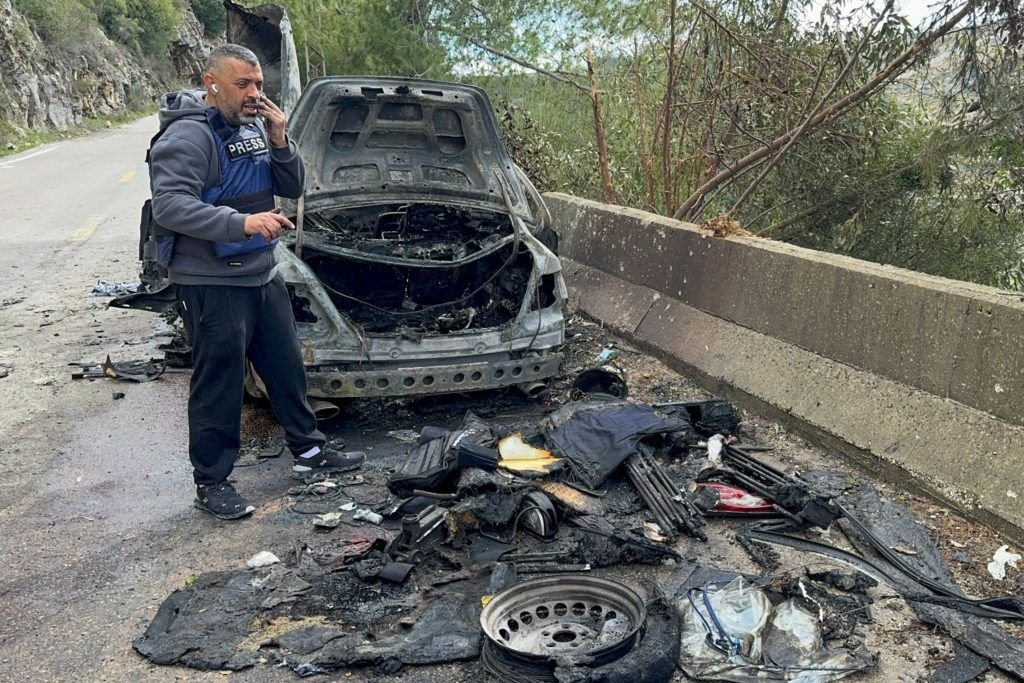
The killing of three journalists yesterday, March 28, in southern Lebanon has triggered international outrage, with critics condemning the actions of the Israel Defense Forces and questioning the credibility of its justification. The victims are Ali Shaib, Fatima Ftouni, and Mohammed Ftouni were reportedly on assignment near the Israeli-Lebanese border when an Israeli airstrike struck their position, killing all three.
According to the IDF, the strike targeted Ali Shaib, alleging he had links to Hezbollah intelligence operations. However, no concrete evidence has been publicly presented to support this claim. More troubling to observers is the absence of a clear explanation regarding the deaths of Fatima Ftouni and Mohammed Ftouni, both widely recognized as journalists with no established role in hostilities.
Lebanese authorities swiftly condemned the strike, calling it a blatant violation of international humanitarian law, which protects journalists as civilians in conflict zones. Media organizations, including Al-Manar TV and Al-Mayadeen, rejected the allegations outright, insisting that the victims were engaged solely in journalistic work. They described the attack as a deliberate effort to silence reporting from the front lines.
Beyond condemnation, the incident has fueled growing skepticism toward the IDF’s narrative. Analysts argue that invoking alleged militant links without transparent evidence risks appearing as a post-hoc justification rather than a credible military rationale. In a conflict increasingly shaped by information warfare, such claims if unsubstantiated can erode international trust and raise serious questions about accountability.
The broader context deepens concern. As tensions between Israel and Hezbollah intensify, and regional actors continue to be drawn into the conflict, the line between combatant and civilian appears increasingly blurred. Journalists, tasked with documenting these realities, are finding themselves in ever greater danger.
Condemnation of the strike reflects more than political disagreement it underscores a fundamental principle: even in war, there are limits. If journalists can be killed based on unverified claims, it risks normalizing impunity under the fog of conflict. The deaths of these three individuals demand not only mourning, but a credible and transparent investigation before such incidents become an accepted cost of war.
Leave a Reply