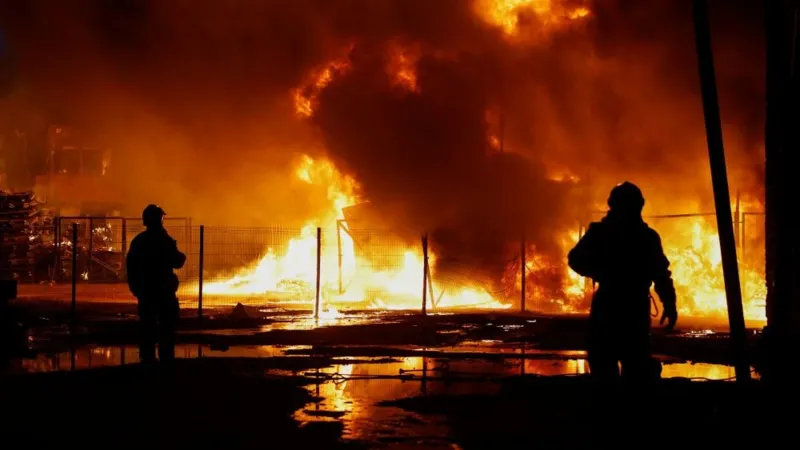
Kyiv 16 April 2026
A wave of international condemnation has followed a devastating large-scale aerial assault by Russia on Ukraine’s capital, Kyiv, in what officials are calling one of the most intense and deadly attacks of the year. The overnight strike, which unfolded into the early hours of April 16, involved hundreds of drones and dozens of missiles targeting not only Kyiv but also other major Ukrainian cities.
According to Ukrainian authorities, at least 17 people have been confirmed dead, while more than 100 others sustained injuries. Emergency services continue to search through debris, warning that the death toll may rise as rescue operations progress. Among the casualties were civilians caught in residential buildings struck by explosive drones, including at least one child, further intensifying global outrage.
President Volodymyr Zelenskyy strongly condemned the attack, describing it as a “deliberate act of terror against civilians.” In a public address, he urged the international community to increase pressure on Russia and expand military and humanitarian support for Ukraine. “This is not warfare; this is calculated destruction aimed at breaking our people,” he said.
The assault saw the deployment of hundreds of Iranian-designed drones alongside high-precision missiles, overwhelming Ukraine’s air defense systems despite successfully intercepting many incoming threats. Several drones penetrated defenses and struck residential districts, sparking fires and causing structural collapses in multiple neighborhoods across Kyiv. In addition to the capital, cities such as Odesa and Dnipro also reported fatalities and widespread damage.
Eyewitness accounts describe a night of chaos, with sirens blaring continuously as explosions echoed across the skyline. Residents sought shelter in underground stations and basements, many emerging hours later to scenes of destruction. “We heard multiple blasts, then the windows shattered,” said one Kyiv resident. “By morning, parts of our building were gone.”
International leaders swiftly denounced the strikes. Several European governments labeled the attack a violation of international humanitarian law, emphasizing the indiscriminate nature of the bombardment. Human rights organizations have also called for investigations into potential war crimes, particularly given the targeting of civilian infrastructure.
The escalation comes amid ongoing tensions in the prolonged conflict, with analysts warning that the increasing scale and frequency of drone warfare marks a dangerous new phase. The use of large swarms of unmanned aerial vehicles has allowed Russia to stretch Ukraine’s defenses, making it more difficult to protect critical infrastructure and population centers.
Despite the destruction, Ukrainian officials reaffirmed their resolve. Emergency crews continue to work tirelessly, extinguishing fires and rescuing survivors trapped beneath rubble. Citizens have mobilized to donate blood, food, and supplies, demonstrating resilience in the face of repeated attacks.
As the situation develops, the international community faces renewed pressure to respond decisively. The scale of the casualties over 17 dead and more than 100 injured underscores the human cost of the conflict and the urgent need for diplomatic and humanitarian action.
The attack on Kyiv stands as a stark reminder that the war is far from over, and that civilians remain at the heart of its devastation.
Leave a Reply