Myanmar, 26 April 2026
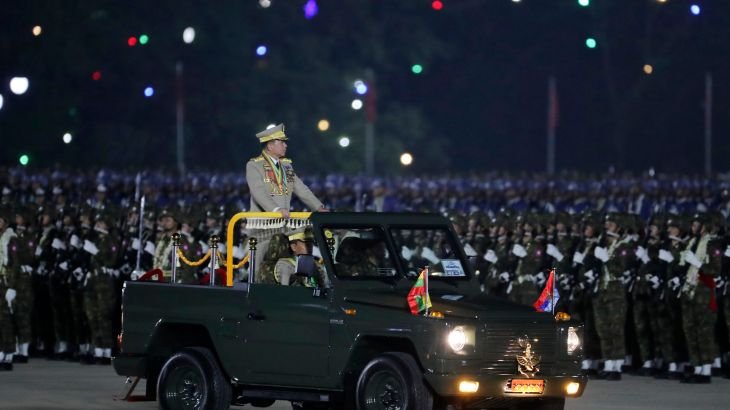
The military-led government of Myanmar has declared a state of emergency across more than 60 townships, significantly tightening its grip over areas affected by ongoing armed conflict. The move, announced in 24 April 2026, reflects a deepening crisis as the country continues to grapple with instability following the 2021 coup.
According to official statements, the emergency measures are concentrated in regions experiencing intense fighting between the military known as the Tatmadaw and a range of opposition forces, including pro-democracy resistance groups and ethnic armed organizations. Several of these townships are located in strategically important border and rural areas where government control has weakened.
Under the declaration, the military assumes full administrative, judicial, and security authority in the affected zones. This effectively places these areas under martial law, allowing commanders to enforce curfews, restrict movement, detain suspects, and try civilians in military courts. Authorities have framed the move as necessary to restore “law and order,” though critics argue it represents a further erosion of civil liberties.
The emergency measures are expected to last for at least 90 days, though analysts warn they could be extended if the security situation fails to improve. Similar temporary declarations in the past have often been prolonged, raising concerns among human rights groups and international observers.
The latest development comes amid a prolonged and complex conflict that has engulfed Myanmar since the military seized power in February 2021, ousting the elected government led by Aung San Suu Kyi. The coup triggered widespread protests, which were met with violent crackdowns. Over time, the unrest evolved into a nationwide resistance movement, with armed groups forming to oppose military rule.
In recent months, clashes have intensified in several regions, with reports of coordinated offensives by resistance forces. Some ethnic armed groups have also expanded their operations, taking advantage of the military’s stretched resources. This has led to growing instability, with key transport routes disrupted and local administrations collapsing in certain areas.
The humanitarian situation has also worsened. Thousands of civilians have been displaced due to ongoing fighting, while access to food, healthcare, and basic services has been severely limited in conflict zones. Aid organizations have repeatedly called for safe corridors and ceasefires, but progress has been limited.
International reactions to the expanded emergency declaration have been largely critical. Regional bloc ASEAN has struggled to mediate the crisis, despite proposing a peace plan that includes dialogue and cessation of violence. However, implementation has stalled, with the military government showing limited willingness to engage with opposition groups.
Western governments have also condemned the continued use of emergency powers, viewing them as a tool to consolidate military control rather than resolve underlying political tensions. Sanctions targeting military leaders and associated businesses remain in place, though their effectiveness in altering the situation on the ground is debated.
For many observers, the declaration underscores the entrenched nature of Myanmar’s crisis. Rather than signaling a path toward stability, the expansion of emergency rule suggests that the military is preparing for a prolonged confrontation. With no clear political solution in sight, the country risks further fragmentation and suffering.
As the situation develops, attention will remain on whether the emergency measures succeed in restoring order or deepen divisions in an already fractured nation.
Leave a Reply