
Friday 17 April 2026
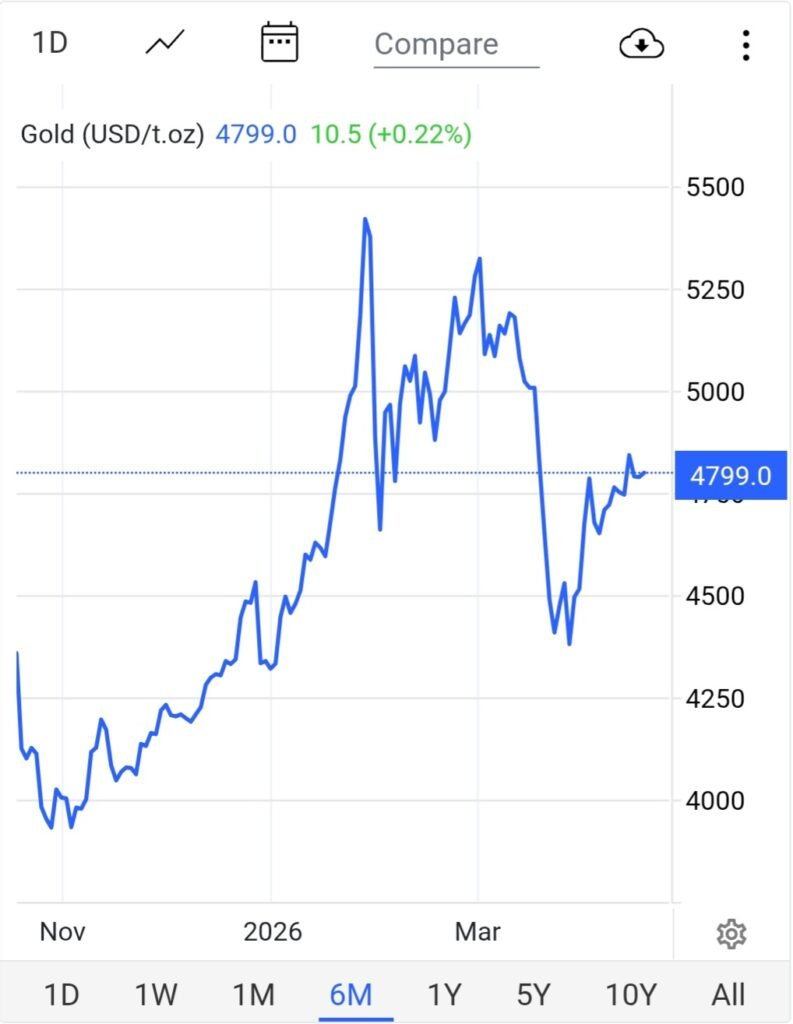
Gold remains firmly positioned near historically elevated levels, reflecting sustained demand driven by global uncertainty, shifting interest rate expectations, and continued investor preference for defensive assets. Despite periodic fluctuations in sentiment across equity markets, gold has maintained resilience, suggesting that market participants still view it as a core hedge rather than a short term speculative instrument.
At current pricing levels, the gold market is showing characteristics of a mature upward cycle. The pace of gains has moderated compared to earlier phases of the rally, yet there is no clear evidence of broad distribution or aggressive selling pressure. Instead, price action indicates consolidation within a high range, which often signals that institutional players are rebalancing rather than exiting positions entirely. This type of behavior typically occurs when markets transition from momentum driven growth into stability driven accumulation phases.
For retailers and bullion related businesses, the present environment demands a more disciplined inventory approach. Holding large physical stock at elevated price levels increases exposure to downside volatility if macro conditions shift unexpectedly. At the same time, consumer demand often remains steady in high price environments due to cultural and investment driven purchasing behavior, particularly in regions where gold is treated as a long term store of value. The key operational challenge is balancing turnover with price risk, ensuring that inventory levels remain flexible enough to respond to both demand spikes and potential corrections.
From an individual investor perspective, the decision between buying and selling gold at this stage is less about directional conviction and more about portfolio structure. Investors with significant unrealized gains may consider partial profit realization to lock in returns while maintaining core exposure for long term hedging. This approach reduces vulnerability to short term pullbacks without fully exiting a strategic asset class that continues to benefit from macro uncertainty.
For new entrants, chasing the market at current highs introduces timing risk. Historically, gold markets at elevated levels often experience consolidation phases where prices move sideways or retrace moderately before establishing the next upward leg. As such, a phased accumulation strategy is generally more prudent. Gradual entry during minor dips or periods of reduced volatility can help improve average positioning while avoiding the psychological pressure of buying at peak sentiment.
Macro conditions remain a key driver. Expectations of softer inflation trajectories and potential policy easing in major economies have reduced real yield pressure, indirectly supporting gold prices. At the same time, geopolitical uncertainty continues to provide a baseline demand floor, preventing sharp downside corrections. This dual support structure explains why gold has remained stable despite mixed performance across risk assets such as equities.
In conclusion, the gold market is currently in a high consolidation phase rather than an early breakout or deep correction stage. The optimal strategy is selective positioning rather than aggressive directional bets. Existing holders should consider gradual profit taking into strength, while new investors should prioritize disciplined accumulation rather than immediate full exposure. Gold remains structurally supported in the long term, but short term dynamics call for caution, patience, and structured decision making rather than emotional reaction to price movements.
Leave a Reply