New Delhi 16 April 2026
India is currently debating a major political reform that would reserve around one-third of seats in its parliament and state assemblies for women. The proposal is being described as one of the biggest changes to the country’s electoral system in decades, but it has also sparked political tension, delays, and renewed criticism of the deep-rooted patriarchal structure in Indian politics.
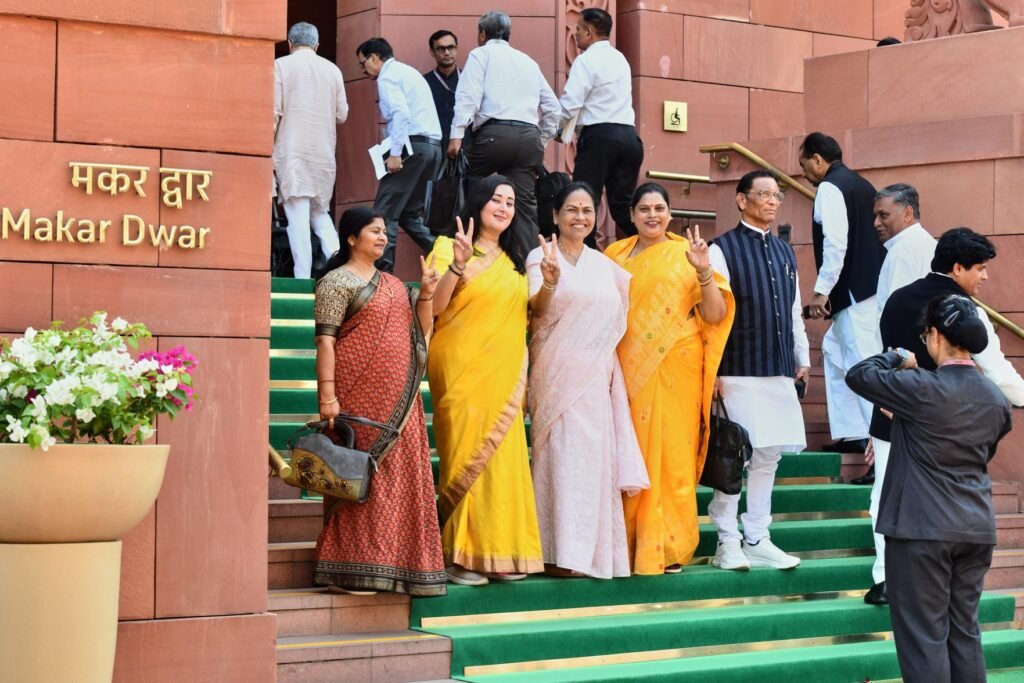
The reform aims to increase women’s representation in government by guaranteeing them 33% of legislative seats. At present, women remain significantly underrepresented in Indian politics, holding only a small portion of elected positions despite making up roughly half the population. If implemented, the policy would mark a major shift in how candidates are selected and how political power is distributed.
However, the plan is not expected to take effect immediately. It is linked to technical and administrative steps such as conducting a national census and redrawing electoral boundaries, a process known as delimitation. These steps are complex and time-consuming, meaning the reform could take several years before it is fully implemented, with some estimates suggesting it may not take effect until around 2029 or later.
Supporters of the reform argue that it is a necessary correction to long-standing inequality. They say that without legal intervention, political parties have little incentive to increase women’s representation on their own. In India’s current political system, most candidates are selected by party leaderships that are dominated by men, which makes it difficult for women to break through.
The reform also includes provisions that would rotate reserved seats over time, meaning different constituencies would be assigned for women candidates in different election cycles. Supporters say this prevents any single region from being permanently reserved and ensures that women have opportunities across the country. However, critics argue that this rotation system could create uncertainty for candidates and weaken long-term political planning.
Opposition parties have also raised concerns about the timing and motivation behind the proposal. Some argue that it is being introduced without updated demographic data, since India has not conducted a full census since 2011. Others believe the government may be using the reform as a political tool rather than a purely social improvement.
Beyond the technical debate, the reform has highlighted a deeper issue: the continued influence of patriarchy in Indian politics. Even though democratic institutions exist, political power remains heavily concentrated among men. Women often face structural barriers such as limited access to party leadership positions, weaker financial backing for campaigns, and social expectations that discourage them from entering politics.
At the local level, however, similar reservation systems have already been implemented. In village councils and municipalities, seats reserved for women have increased female participation and, in some cases, improved focus on issues like education, sanitation, and healthcare. These results are often used as evidence that reservation can bring real change when properly enforced.
Still, experts warn that legal reform alone may not be enough. In many cases, women elected through quotas still operate within male-dominated party structures, limiting their independence and influence. This raises concerns that representation without real authority could result in symbolic progress rather than true empowerment.
Overall, India’s proposed women’s reservation reform represents both progress and hesitation. It is a bold attempt to reshape political representation, but its slow implementation and surrounding controversy reflect how deeply patriarchal systems remain embedded in the country’s political landscape.
Leave a Reply