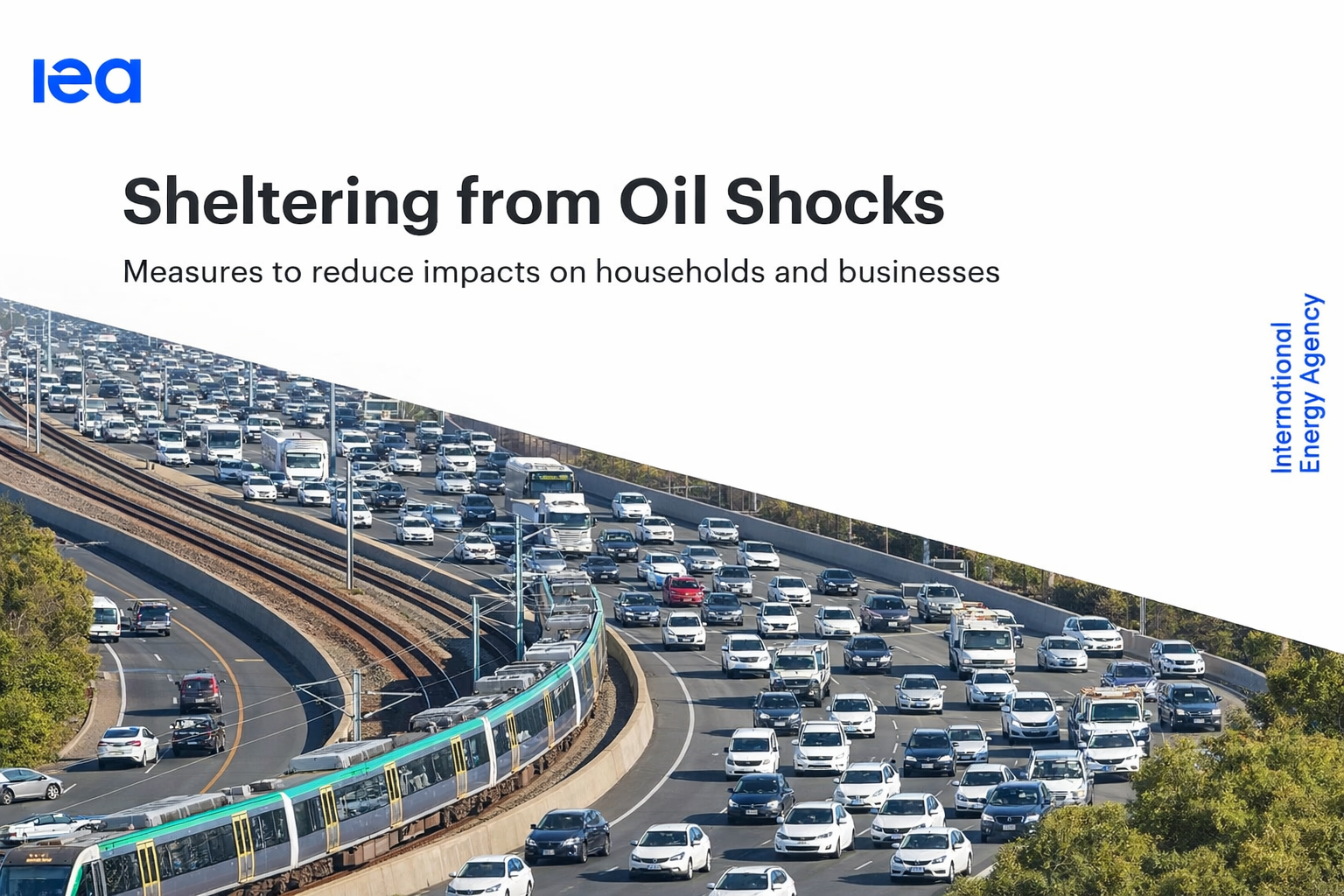
On 20 March, as global oil prices surge amid geopolitical tensions and supply, the International Energy Agency (IEA) released a new report outlining emergency measures to ease price pressures. Rather than focusing on increasing supply, the agency proposes a set of demand-side actions encouraging individuals and businesses to reduce oil consumption through behavioral changes such as working from home, limiting air travel, and reducing driving speeds.
While these recommendations may offer short-term relief, they have sparked widespread debate. Critics argue that the measures are insufficient, inequitable, and shift responsibility onto consumers rather than addressing deeper structural issues in global energy markets.
Overview of the IEA’s Proposed Measure
The IEA’s recommendations are centered on reducing immediate oil demand. Key proposals include:
1. Encouraging remote work where possible
2. Reducing speed limits on highways
3. Promoting public transportation and carpooling
4. Limiting non-essential air travel
5. Encouraging behavioral changes in energy consumption
These measures aim to quickly lower fuel demand during a period of constrained supply, particularly due to disruptions in key oil transit routes.
Key Issues and Criticisms
1. Shifting Responsibility to Consumers
One of the most prominent criticisms is that the IEA’s approach places the burden on individuals rather than governments or oil producers. Asking people to drive less or avoid flying may be practical in theory, but in reality, many workers lack the flexibility to change their routines.
This raises concerns about fairness and accountability. Structural issues such as supply constraints, geopolitical instability, and energy policy failures are not directly addressed by consumer-level actions.
2. Limited Impact on Global Oil Prices
Although reducing demand can help stabilize markets, the scale of current supply disruptions significantly limits the effectiveness of such measures. Major chokepoints in global oil transport, particularly in politically sensitive regions, can impact a large share of global supply.
As a result, even widespread adoption of the IEA’s recommendations is unlikely to produce substantial or sustained reductions in oil prices.
3. A Short-Term Fix to a Long-Term Problem
The IEA’s measures are inherently temporary. They are designed as emergency responses rather than long-term solutions. However, the underlying causes of high oil prices, geopolitical conflict, supply chain vulnerabilities, and dependence on fossil fuels require structural reforms.
Without addressing these deeper issues, demand-reduction strategies risk becoming recurring stopgap measures rather than sustainable solutions.
4. Implementation Challenges Across Countries
The global nature of oil markets means that coordinated action is necessary for meaningful impact. However, implementing policies such as reduced speed limits or travel restrictions requires political will and public cooperation both of which vary widely across countries.
In many regions, such measures could face resistance due to cultural, economic, or political factors, limiting their effectiveness on a global scale.
5. Economic Consequences
Reducing travel and commuting has broader economic implications. Industries such as aviation, tourism, and transportation could be negatively affected by decreased demand. Additionally, reduced mobility can have indirect effects on productivity and economic growth.
While the goal is to stabilize energy prices, the trade-offs for certain sectors could be significant.
6. Inequality and Accessibility Concerns
Not all individuals are equally positioned to adopt the IEA’s recommendations. Lower-income groups, for example, are less likely to have jobs that allow remote work and may depend more heavily on private vehicles due to limited access to public transportation.
This creates an uneven distribution of responsibility, where those with fewer resources bear a disproportionate burden of adjustment.
7. Political Sensitivity and Public Acceptance
Policies that directly affect daily life such as limiting travel or imposing restrictions on driving are often politically sensitive. Governments may be reluctant to enforce such measures due to the risk of public backlash.
Past attempts at similar demand-reduction strategies have shown that public compliance can be difficult to achieve without strong incentives or clear communication.
The International Energy Agency report offers a pragmatic set of tools to manage oil demand during a crisis. However, its reliance on behavioral changes highlights a broader tension in global energy policy: the balance between immediate action and long-term solutions.
While demand-side measures can play a role in easing short-term pressures, they are not a substitute for structural reforms. Addressing supply vulnerabilities, investing in energy diversification, and accelerating the transition to renewable energy remain essential to achieving lasting stability in global energy markets.
Ultimately, the effectiveness of the IEA’s recommendations will depend not only on public willingness to adapt, but also on the ability of policymakers to address the deeper challenges underlying the current energy crisis.
References
International Energy Agency. “Options to Ease Oil Price Pressures on Consumers”, 2026.
Reuters. “IEA advises work from home and reduced travel to ease oil prices”, March 2026.
The Guardian. “Energy watchdog suggests demand cuts amid rising oil prices”, March 2026.
Financial Times. “Global energy risks and supply disruptions analysis”, 2026.
Leave a Reply