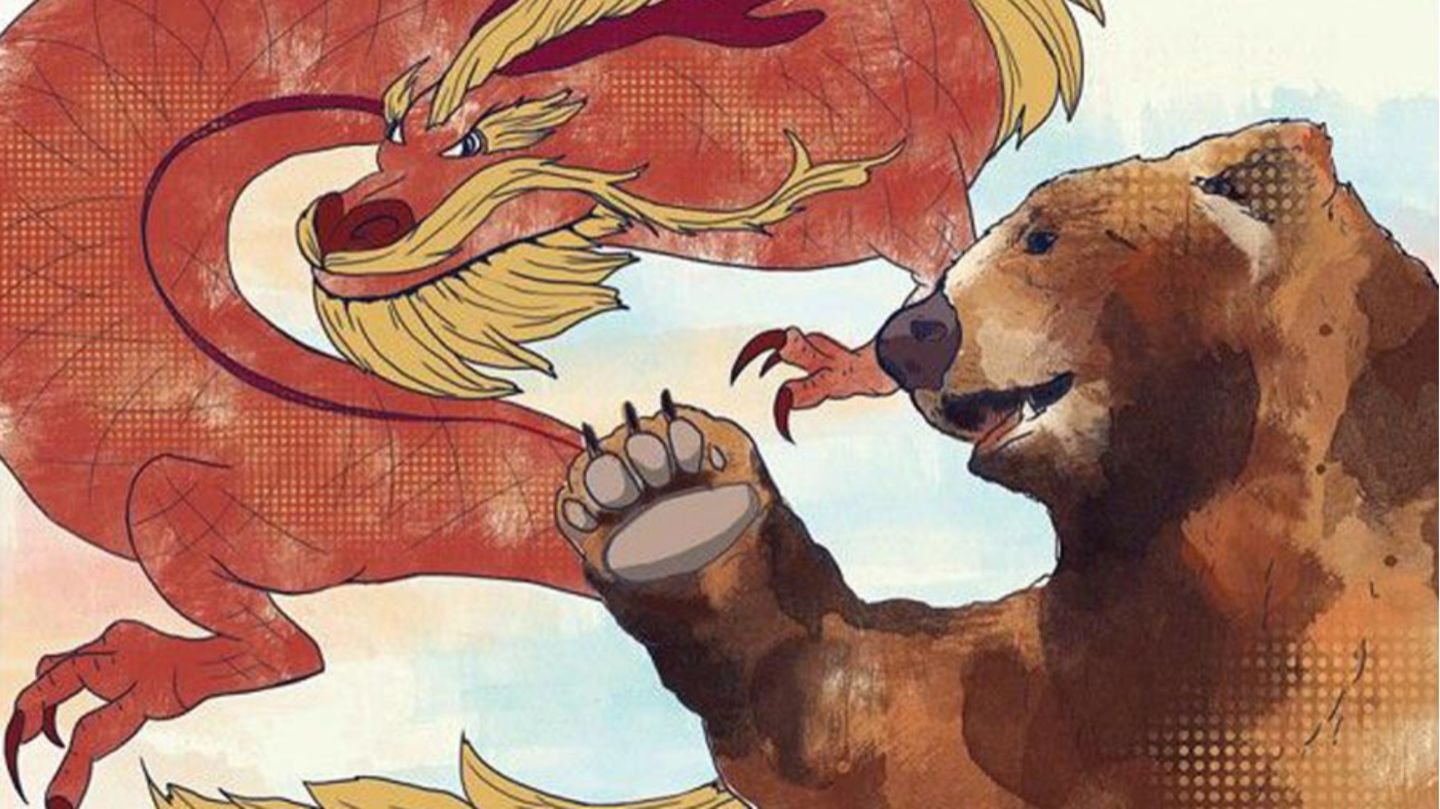
A Geopolitical Assessment of Eurasian Powers in a Fragmenting Middle East
Introduction: The Shockwaves of Conflict
When the United States and Israel launched their military campaign against Iran in late February 2026, the strikes reverberated far beyond the Persian Gulf. For Moscow and Beijing—Tehran’s most consequential partners in the multipolar project they have long championed—the conflict presented an immediate strategic calculus that balanced opportunism against existential risk. While both powers publicly condemned the aggression, their responses revealed the limits of their commitment to Tehran and the fragility of the “no limits” partnerships they had cultivated.The war has tested the resilience of the Russia-Iran alliance, strained China’s energy security architecture, and exposed the vulnerabilities of the anti-Western bloc that these powers have sought to construct. Yet it has also offered opportunities: a distracted America, a weakened rules-based order, and potential avenues for diplomatic mediation that could elevate Moscow and Beijing as indispensable regional brokers.
Russia: Between Opportunism and Exposure
The Strategic Dilemma
Moscow’s response to the conflict has been characterized by what Chatham House analysts describe as “strategic hedging”—a posture of sharp rhetorical condemnation coupled with decisive military restraint . The Kremlin has denounced the killing of Iranian Supreme Leader Ali Khamenei as “illegal and immoral” and condemned the operation as an “unprovoked act of armed aggression,” even as Russia launched 106 missiles and drones against Ukraine on the same day .This performative outrage masks a deeper anxiety. Iran represents what Soviet Foreign Minister Vyacheslav Molotov once called a “structural node on the southern flank” of Russian influence—a perennial tenet of Moscow’s foreign policy that remains relevant today . Russia has invested decades of capital into Iran’s energy sector, railway infrastructure, and nuclear facilities, including the high-risk venture of constructing the Bushehr nuclear power plant. Moscow has become Tehran’s primary arms supplier, with components of Russian-made drones discovered in attacks across the Arabian Peninsula .Yet the Kremlin has made clear it will not enter military confrontation with the US-Israel coalition. This reveals the fundamental asymmetry of the Russia-Iran partnership: while valuable, it is not worth risking direct conflict with nuclear-armed Western powers or jeopardizing potential negotiations over Ukraine.
The Opportunity Cost
For Moscow, the war’s primary utility lies in distraction. The Kremlin hopes that a protracted conflict in the Middle East will divert Washington’s attention from Ukraine, delay any negotiated settlement favorable to Kyiv, and potentially slow the flow of American military assistance . With the US preoccupied elsewhere, Russia anticipates greater freedom of maneuver in its ongoing war against Ukraine.Furthermore, Moscow positions itself as a potential mediator, championing its previously proposed “collective security architecture in the Gulf region” . This allows Russia to maintain relevance even as its material capabilities in the region atrophy following the fall of Assad in Syria.
The Multipolar Narrative at Risk
The conflict poses an ideological challenge to Moscow’s grand strategy. Yevgeny Primakov’s 1998 vision of a multipolar world—where powers like Iran, China, and Russia balance American hegemony—faces its most severe test. As CEPA fellow Mathieu Boulègue notes, “If the US and Israel succeed in degrading Iran’s strategic position, the narrative of a resilient multipolar order loses ideological traction” .The Kremlin fears that successful regime change in Tehran would demonstrate that no leader is safe from American policy—a precedent that haunts authoritarian capitals worldwide. Conversely, a weakened but surviving Iranian regime may prove less accommodating to Russian interests, forcing a complete recalculation of Moscow’s southern strategy.
China: The Calculated Neutral
Energy Security Under Siege
China’s response has been defined by strict neutrality—a “balancing act” that prioritizes economic interests over diplomatic solidarity . This caution reflects the devastating immediate impact on Beijing’s energy security. China was importing approximately 1.4 million barrels per day (mbd) from Iran—representing 13% of total crude imports and 80-90% of Tehran’s oil exports—much of it purchased at discounted rates through the 25-year, $400 billion cooperation agreement signed in 2021 .The collapse of Iranian exports has created a 1.0 to 1.4 mbd shortfall for China, hitting particularly hard at the private “teapot” refineries that specialized in processing sanctioned Iranian crude . These refineries, which operated through China’s Cross-border Interbank Payment System (CIPS) to circumvent SWIFT and avoid Western financial scrutiny, now face high replacement costs in a market where oil prices hover near $100 per barrel .The closure of the Strait of Hormuz—a critical chokepoint through which roughly 20% of global oil flows—threatens an additional 5.4 mbd of Chinese imports from Saudi Arabia, Iraq, the UAE, and Qatar . This represents an existential threat to Chinese economic stability; economic modeling suggests a sustained 25% increase in oil prices could reduce China’s GDP by 0.5% .
Buffers and Resilience
Beijing entered the crisis better prepared than most importing nations. China had engaged in aggressive stockpiling in early 2026, with oil imports surging 16% in January and February . Strategic and commercial reserves now total 1.3 to 1.4 billion barrels—covering approximately four months of imports . Pipeline deliveries from Russia have increased by roughly 300,000 barrels daily, though Russian capacity constraints and competing Indian demand (bolstered by a US waiver allowing Indian imports of Russian crude) limit further relief .Domestic production and fallback options like coal provide additional insulation, meaning China “will still be affected, but likely less than many others,” according to energy strategist Tatiana Khanberg . This resilience is reflected in financial markets, where the renminbi has stabilized following initial volatility .
The Geopolitical Dividend
China’s neutrality serves a broader strategic purpose. By avoiding entanglement while appearing as a “stable and rational nation compared to the US,” Beijing may accelerate trade realignment toward China as countries seek refuge from American-led chaos . Managing director Ben Cavender notes that China has “very little to lose by staying quiet and a lot to gain by being seen as a neutral party” .This positioning allows China to maintain relationships with all parties—including the Gulf states with whom Beijing has cultivated increasingly close economic ties through initiatives like the China-Gulf Cooperation Council free trade negotiations. The war has disrupted China’s rapidly growing exports to the Middle East—particularly automobiles to the UAE and steel to Saudi Arabia—but Beijing prioritizes long-term positioning over short-term commercial losses .
Post-War Scenarios: The New Regional Architecture
The Brokerage Opportunity
Both Moscow and Beijing are positioning themselves for post-conflict mediation roles. Russia hopes to leverage its relationship with Tehran to secure a place at the negotiating table, potentially reviving its Gulf security architecture proposals. China, with its economic leverage and neutral stance, could emerge as the primary external actor in a reconstructed Iran, particularly if a new government seeks rapid infrastructure reconstruction .
Strategic Realignment
A prolonged conflict risks spillover effects—refugee flows, arms proliferation, and militant networks—that threaten Russia’s southern flank and China’s Belt and Road Initiative projects across Central Asia . Both powers face the challenge of managing regional fragmentation while preventing the complete collapse of Iranian state capacity, which could create a vacuum for jihadist organizations or American military bases.Should Tehran emerge significantly weakened but territorially intact, Moscow will likely attempt to deepen military-technical cooperation, providing covert support for regime stabilization while publicly advocating for diplomacy. Beijing, conversely, may pursue a “controlled distancing” strategy, maintaining economic ties while avoiding the reputational risks of association with a pariah state .
The China Variable
The war has illuminated a fundamental shift in Eurasian geopolitics: Beijing, not Moscow, possesses the economic instruments to shape post-war Iran. Russia lacks the financial weight to underwrite Iranian reconstruction or stabilize its economy. China holds this capacity—but will deploy it selectively, conditioned on political stability and oil access.This creates an implicit competition between the two nominal allies for influence in Tehran, even as both publicly champion their “no limits” partnership. The war may ultimately accelerate a transition from a Russia-led to a China-led engagement strategy with Iran, reflecting broader shifts in Eurasian power distribution.
Conclusion: The Limits of Anti-Western Solidarity
The US-Israel-Iran war has exposed the constraints of the Russia-China-Iran axis. Despite decades of diplomatic coordination, shared hostility to American primacy, and substantial economic interdependence, neither Moscow nor Beijing was willing to risk direct confrontation to prevent Tehran’s degradation. Their responses—opportunistic hedging from Russia, economic self-preservation from China—reveal that the multipolar project remains a coordinating framework rather than a mutual defense pact.For Russia, the war offers temporary relief in Ukraine at the cost of potentially losing its most reliable Middle Eastern partner. For China, the conflict tests energy security resilience while offering a chance to appear as the adult in a room of belligerents. Both powers will survive the crisis, but the notion that they can collectively restrain American military action has suffered a decisive blow.In the emerging regional order, Moscow and Beijing will compete as much as coordinate for influence in a fragmented Middle East, with Iran—whether surviving or transformed—serving as the primary theater for this great power rivalry. The war has not ended the multipolar moment, but it has revealed its boundaries: when the missiles fly, even strategic partners are ultimately on their own.
Sources:
CEPA (2026), “Russia, Europe, and the Iran War”
Chatham House (2026), “The Iran war exposes the limits of Russia’s leverage”
Defense Priorities (2026), “Beijing’s balancing act in the Iran war”
Bruegel (2026), “What the war in Iran means for China”
Euronews (2026), “China treads carefully on energy interests in Iran war”
Leave a Reply