March 28, 2026
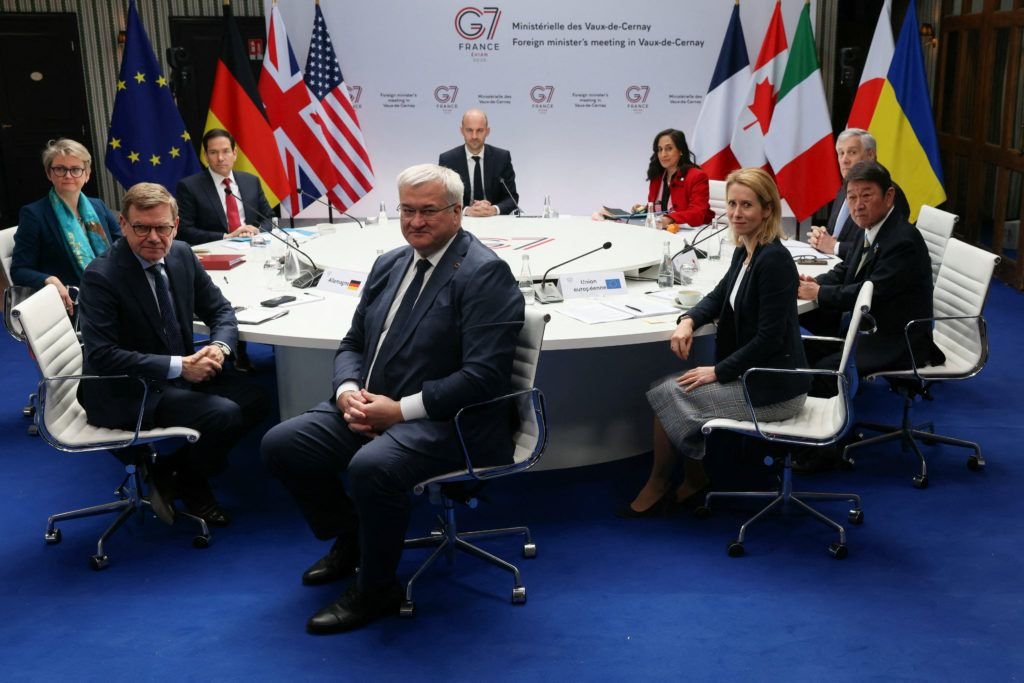
The recent G7 meeting in France brought together key leaders, including U.S. Secretary of State Marco Rubio, EU Foreign Policy Chief Kaja Kallas, and France’s Foreign Minister Jean-Noël Barrot. The agenda was clear: address the Iran conflict, the war in Ukraine, and the ripple effects on global energy markets.
On paper, the messaging was strong. Ministers called for “an end to attacks on civilians and critical infrastructure” in Iran and emphasized safeguarding the Strait of Hormuz, warning of economic fallout from supply disruptions. Yet behind the rhetoric, divisions were obvious, a bit cautious and cowardly.
Tensions surfaced during Ukraine discussions. Kallas pressed Washington on increased pressure against Russia, sparking a “frank exchange of views” with Rubio. Kallas cautioned, “we need to exit from the war, not escalate,” while Rubio signaled that U.S. priorities come first, reflecting Washington’s independent approach. France pushed for diplomacy, stressing that the crisis “can only be a diplomatic solution,” and Germany remained cautiously optimistic, with one minister saying he was “quite confident” a common position could still be reached.
Critics argue the G7’s approach is reactive rather than decisive. While statements condemning attacks are morally necessary, they lack enforcement, and proposals like protecting maritime routes, focus on aftermath rather than immediate control. Analysts warn that hesitancy risks undermining credibility, especially as conflicts in Iran and Ukraine intertwine and affect energy and global markets.
The meeting highlighted a fundamental challenge: unity among diverse powers is increasingly difficult to maintain. One diplomat summed it up as “a difficult balance between unity and national interests.” Today, crises are interconnected, requiring bold, coordinated leadership not cautious statements and vague timelines.
The G7 still wields influence, but unless its words translate into action, that influence risks being questioned in a world where conflicts are moving faster than diplomacy can respond.
Leave a Reply